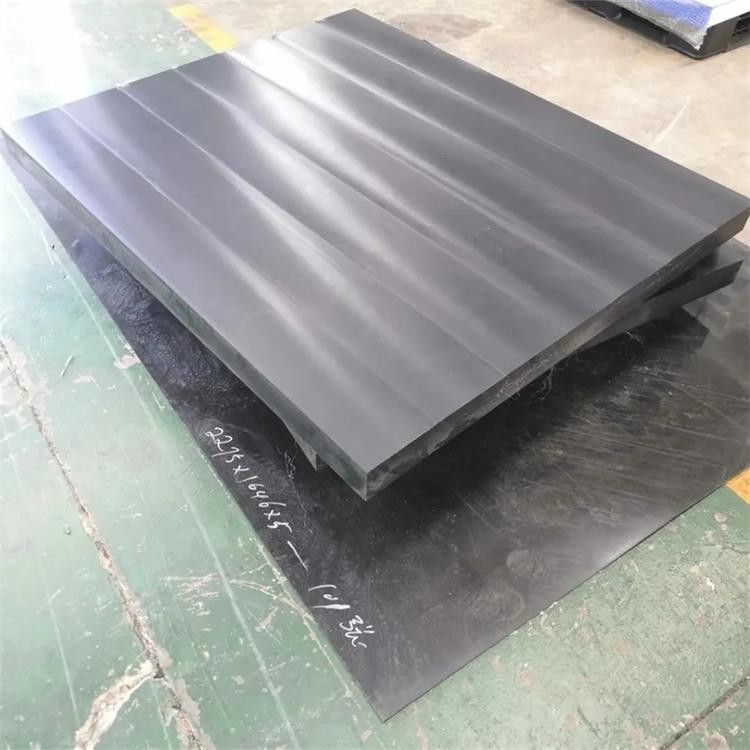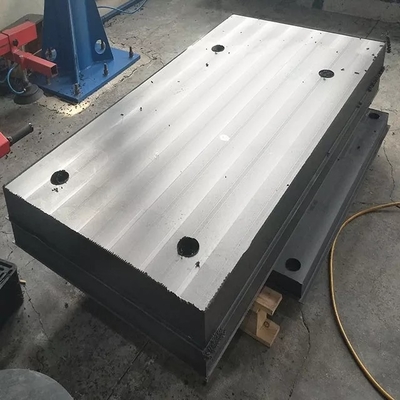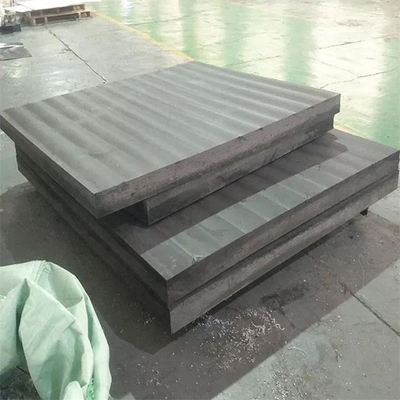

|
Product Details:
|
| Item:: | Anti-radiation Shielding Barium Polyethylene Boron Board | Material: | 100% Virgin PE |
|---|---|---|---|
| Color:: | Natural White, Black, Yellow | Size:: | 1220mm*2440 Mm |
| Thickness:: | 5-200mm | Density:: | 0.94-0.98 G/cm3 |
| Processing Service:: | Cutting, Moulding | ||
| Highlight: | Boron polyethylene shield,Barium Polyethylene Boron Board,5% Borated Polyethylene |
||
Listing 37717249 - Boron Polyethylene Board
What follows is the attribute set stored for the Boron polyethylene shield sold under product id 37717249 by Tangyin Taixing Engineering Plastics Co., Ltd. Shielding work is specified from drawings and dose calculations, so the buyer needs to know exactly which fields are fixed by the listing and which must be settled on the order.
| Attribute | Recorded value |
|---|---|
| Item | Anti-radiation Shielding Barium Polyethylene Boron Board |
| Model Number | Boron polyethylene shield |
| Manufacturer | Tangyin Taixing Engineering Plastics Co., Ltd. |
| Material | 100% virgin PE base polymer with boron compound filler, described in the source text as boron carbide and polyethylene composite material |
| Colour | Natural white, black, yellow |
| Size | 1220 mm x 2440 mm |
| Thickness | 5 mm to 200 mm |
| Density | 0.94-0.98 g/cm3 |
| Processing service | Cutting, moulding |
| Certification | ISO9001 quality management system |
| Place of origin | China |
| Minimum order quantity | 50 kilograms |
| Price basis | Negotiable |
| Payment terms | T/T, Western Union |
| Supply ability | 5000 kilograms per month |
| Delivery time | 15-20 days after deposit received |
| Packaging | Wooden crate or pallet |
Three source problems were handled before publishing. Boron loading is stated only in the stored title and the description heading as 5% borated, because the attribute records carry no separate boron-content field; it is therefore quoted here as the listed grade designation and must be confirmed on the order. The description's test table labels tensile strength in percent and elongation in p.s.i., which are not the units those properties are measured in, so those two rows are reported as printed without being turned into a claim. The description's own figures claiming total attenuation of background radiation are not repeatable measurements and are not used anywhere on this page.
| Group | Format | Where it comes from |
|---|---|---|
| Sheet size | 1220 mm x 2440 mm | Attribute record, quoted as the base sheet |
| Thickness band | 5 mm to 200 mm | Attribute record, applies to the base sheet |
| Cut panel family | 700 mm x 500 mm at 10, 20, 25, 30, 40, 50, 60, 65 and 70 mm | Size table in the original description |
| Cut panel family | 1000 mm x 500 mm at 10, 20, 25, 30, 40, 50, 60, 65 and 70 mm | Size table in the original description |
The two cut panel families appear in the description only and are not carried in the attribute records, so they are quoted as formats that the workshop can produce from the base sheet rather than as stocked items. The source table lists these dimensions with a Cyrillic multiplication sign, which has been normalised to the letter x for this page.
| Property as printed | Unit as printed | Result as printed |
|---|---|---|
| Notched Izod impact | ft. lbs/in.2 | No break |
| Vicat softening temperature | deg C (deg F) | 89 deg C (192 deg F) |
| Tensile strength at break | % | >140 |
| Elongation at yield | p.s.i. | >300 |
| Shore hardness | Shore D | 64 |
| Flexural modulus | p.s.i. | 3000 |
No test method, specimen thickness or conditioning state is recorded with these rows, and the unit column is internally inconsistent for the tensile and elongation entries. They are shown because they are printed for this item, and they should be treated as an indication of a rigid, tough PE-based board rather than as a shielding calculation input.
Construction
A borated shield board does two jobs at once. The polyethylene matrix slows fast neutrons by scattering them through its hydrogen content, and the boron filler captures the slowed neutrons once they reach thermal energy. Neither job is a surface effect, so the board works through its full thickness and the way that thickness is built matters as much as the polymer it is built from.
The Boron polyethylene shield from Tangyin Taixing Engineering Plastics Co., Ltd. is recorded as 100% virgin PE with a boron compound filler, described in the source text as boron carbide combined with polyethylene. Around 5% boron loading is stated in the stored title and in the description heading. The description also notes that boron carbide, borax, boron trioxide and lead powder can be added according to customer requirements, which means the filler system is an order variable, not a fixed recipe implied by every panel of this shape.
Density is recorded as 0.94-0.98 g/cm3, the band that covers the PE family. For a shield board that band is a proxy for how much material, and therefore how much hydrogen and boron, sits in a given volume. A board at the top of the band carries more mass per cubic centimetre than one at the bottom, and a supplier quoting shielding performance should be able to say where in the band the delivered board sits.
Thickness is the main lever the buyer controls. At 5 mm the board is a lining for a cabinet wall, a door skin or a small mobile screen. At the 200 mm end of the recorded band it is a substantial block that can be machined into a shaped shield, a storage cask liner or a local shadow shield around a source. Because the listing records one continuous band rather than a set of stocked thicknesses, any figure inside 5 mm to 200 mm is a quotation and cutting question, and the panel mass rises with it.
Thicker is not automatically better for a given room. A shield works as a barrier only where it covers the whole sight line, so a thick panel with a gap beside it leaks at the gap, while a continuous thinner layer over the full area may be the better build. That is why the joint and lap detail below is part of the construction rather than an installation afterthought.
The listing records no monolithic or laminated designation, so continuity should be planned on the basis of the board that is quoted, with the lap direction confirmed at order review. A cut edge from the 1220 mm x 2440 mm sheet is the same filled polymer as the face, which is what allows the board to be cut on site to follow a wall or a frame without losing function at the cut. Cutting and moulding are both recorded as available processing services.
Colour is recorded as natural white, black or yellow. Colour has no shielding meaning here; it is a moulding and handling choice, and natural white is the easiest to inspect for contamination, while black and yellow are easier to see in a plant.

Sawing, routing or drilling a filled PE board produces a fine dust that contains the boron filler. The board machines like a dense thermoplastic, so the meaningful controls are mechanical extraction at the cut, a clean-down of the working area afterwards, and keeping the offcuts bagged rather than swept into general waste. This is a handling consequence of the recorded filler, not a compliance claim, and the site records no exposure limit for this material.
| Build element | Recorded basis for this listing | Decision the buyer still owns |
|---|---|---|
| Matrix | 100% virgin PE, density 0.94-0.98 g/cm3 | Whether the delivered density is stated per batch |
| Boron filler | 5% borated as listed; boron carbide noted in the source text | Whether a different loading or a lead-bearing version is required |
| Section | 5 mm to 200 mm band, no lamination stated | Layer count and lap direction against the shield drawing |
| Panel size | 1220 mm x 2440 mm, plus cut panel families | How the room is divided into panels and where seams fall |
| Edge finish | Cutting and moulding offered | Whether edges are square for butt joints or stepped for laps |
Installation
The recorded uses for the Boron polyethylene shield from Tangyin Taixing Engineering Plastics Co., Ltd. are neutron and radiation shielding in nuclear plants and nuclear-powered ships, medical rooms such as X-ray and treatment suites, laboratories working with radioactive installations, and rooms where an elevated background has to be reduced. Every one of those is a shielding geometry problem first and a material purchase second.
The board is a neutron shield above all. It suits applications where slow neutrons have to be absorbed close to the source or close to the occupied space, and where a rigid, machinable, non-corroding panel can be cut, shaped and fixed to an existing wall, door or frame. It also suits mobile work, because a cut panel of the recorded 1220 mm x 2440 mm sheet can be carried and set in front of a source as a temporary shadow shield.
Its secondary advantages are recorded in the description and are real for a plant environment: it does not absorb water, it resists chemicals, it is an electrical insulator and it keeps its impact behaviour at low temperature. Those make it easier to live with than a lead sheet in a wet or washdown area, but they are not shielding arguments.
This listing records no attenuation data, no half-value layer, no boron areal density and no compliance statement against any radiation protection standard, so the board cannot be sized from this page for a licensed installation. A shielding design has to be signed off against the source term and the dose target by the responsible radiation protection engineer, and this page cannot substitute for that calculation. Primary gamma shielding is a separate problem from neutron shielding and should not be assumed from the presence of boron.
Nor is the board a structural element. No load rating, no fixing strength and no temperature service range are recorded, so it should be carried by its own frame or substrate, not used as a self-supporting wall.
Continuity is the whole game. Penetrations for pipes, conduits and ducts are where a shield fails, so the panel layout should be drawn around them rather than cut to fit on site after the fact. Where panels meet, overlap them rather than butting them, and stagger the laps from one layer to the next if more than one layer is used, so no straight path runs through the assembly. Fixings should be countersunk below the surface and, where the board is exposed, capped so the fastener does not become a path through the shield.
Support the board on a flat substrate and keep the panel edges supported, because a board spanning an unsupported gap will creep under its own mass over time. Where the shield forms a door or a movable screen, the hinges and frame carry the load and the board is captive inside them, not bolted through at two points and left to hang.
Confirm the panel schedule against the shielding drawing, including every penetration and the lap at each penetration; confirm the delivered thickness and the number of layers; confirm the fixing positions do not land on a seam; and confirm the board edges are square enough for the joint detail chosen. A joint that has to be packed out on site is a joint that will leak.
Supply
Tangyin Taixing Engineering Plastics Co., Ltd. describes itself as an engineering plastics manufacturer combining production, sales, design and processing, with more than 20 years of experience, a plant area above 25,000 square meters and annual output above 8,000 tons. Its stated range includes UHMWPE board, HDPE sheet, dual colour HDPE sheet, PE marine fender, UHMWPE liner, outrigger pad, synthetic ice rink, plastic conveyor roller, UHMWPE special-shaped parts and HDPE ground protection mat. The export side of the same engineering-plastics business is also named on this site as Beijing Silk Road Enterprise Management Services Co.; the two names describe one manufacturing and export organisation.
The filled PE compound is consolidated on the imported production line and the moulding press, which is where the 5 mm to 200 mm thickness band is set. The CNC precise finishing machine and the CNC machining centres cut the 1220 mm x 2440 mm sheet and the smaller recorded panel sizes, drill fixing holes and machine edges to the joint detail. The carving machine and the sander cover shaped shields and face finishing, and AutoCAD-based design support is where a shielding drawing becomes a cutting list.
In-house verification uses the laboratory listed on this site: the universal mechanical tester for the strength and hardness values printed in the source table, the abrasion tester for wear, and the oxygen index tester for combustion behaviour. The recorded ISO9001 certification is a quality management system covering the manufacture of polyethylene sheet and machined plastic products. It is a system certification, not a product-by-product approval, and it is not a material test report, so it does not in itself certify the boron content or the attenuation of any panel.
| Term | Recorded | Purchasing consequence |
|---|---|---|
| Minimum order quantity | 50 kilograms | The floor is a weight, not a panel count, so the panel schedule is converted to mass before the order is compared with the minimum |
| Supply ability | 5000 kilograms per month | A monthly ceiling stated by weight; a heavy-thickness schedule consumes it faster than a thin lining schedule |
| Delivery time | 15-20 days after deposit received | Counted from the deposit, so panel schedule and joint detail must be agreed before payment |
| Packaging | Wooden crate or pallet | Boards are heavy by volume; crating protects edges and keeps the stack from sliding in the container |
| Payment terms | T/T, Western Union | Both recorded; the deposit that starts the 15-20 day clock is one of these |
| Price | Negotiable | Price follows thickness, panel size, filler system and colour, so those four have to be fixed to obtain a firm figure |
Because both the minimum order and the monthly supply ability of this listing are stated in kilograms, a shielding job should be worked out as a weight schedule rather than a piece count. That conversion is also the fastest way to see whether a room-sized lining sits inside one month of recorded supply or needs to be split across two shipments.
Buyer FAQ
The stored title and the description heading state a 5% borated grade for the Boron polyethylene shield from Tangyin Taixing Engineering Plastics Co., Ltd., and the attribute records carry no separate boron-content field. That means 5% is the listed grade designation of this model, not a value backed by a batch certificate on this page, and it should be written into the purchase order as a required value.
If the shielding calculation depends on the boron areal density, ask for the delivered density inside the recorded 0.94-0.98 g/cm3 band and the filler loading to be stated per batch. Those two figures plus the thickness are what a radiation protection engineer needs to check the panel schedule.
For the Boron polyethylene shield from Tangyin Taixing Engineering Plastics Co., Ltd., panels are joined by lapping rather than butting. Where two panels meet, one overlaps the other, and where more than one layer is used the laps are staggered so no straight seam runs through the full build. Penetrations for pipes and ducts are the critical points and should be detailed on the drawing, not cut on site.
The recorded 1220 mm x 2440 mm sheet is the unit that makes this practical, because a room wall can be divided into panels whose laps land on the frame rather than in mid-air. Countersink the fasteners below the face and cap them where the surface is exposed.
On the Boron polyethylene shield from Tangyin Taixing Engineering Plastics Co., Ltd., the thin end of the band is a lining that can be bonded or fixed inside a door leaf, adding shielding without rebuilding the door. At the thick end it is a block that a standard door frame will not carry, and the shield becomes a separate structure with its own support.
Since this listing records no attenuation figures, the thickness should come from the shielding calculation and the door hardware capacity, not from a rule of thumb. A heavy lining also changes the hinge load, which is a hardware question that arrives before the material question.
For the Boron polyethylene shield from Tangyin Taixing Engineering Plastics Co., Ltd., the source text says that boron carbide, borax, boron trioxide and lead powder can be added according to customer requirements. That describes the filler options the workshop can compound, and it explains why the filler system is treated here as an order variable rather than a fixed recipe.
Lead-bearing board is a different material with a different handling regime, so it must be specified explicitly and never assumed. If a gamma component has to be dealt with as well as neutrons, that belongs in the enquiry so the correct filler system is quoted against the recorded 1220 mm x 2440 mm sheet and the thickness band.
Fifty kilograms is the recorded minimum order quantity for the Boron polyethylene shield from Tangyin Taixing Engineering Plastics Co., Ltd., and because it is a weight rather than a piece count, a single small panel may fall short of it. The repair is then either combined with other panels on the same drawing or with spares held for future work.
Working the panel schedule out by mass is the quickest way to see where the order stands against the minimum, and it also tells you how much of the recorded 5000 kilogram monthly supply ability the job will consume.
For the Boron polyethylene shield from Tangyin Taixing Engineering Plastics Co., Ltd. it is recorded as 15-20 days after deposit received. The clock therefore starts at the payment, and any drawing change made after that point runs on top of the window rather than inside it.
Panel schedule, filler system, thickness and colour should all be closed before the deposit is sent. If the project has a plant outage date, book the installation window behind the arrival and inspection of the boards, not behind the dispatch date.
Store the Boron polyethylene shield from Tangyin Taixing Engineering Plastics Co., Ltd. flat on a pallet or in its crate, out of direct sun and off a wet floor. The board does not absorb water and will not rot, but a stack left on edge against a wall will bow over time, and a bowed panel is difficult to lap cleanly against its neighbour.
Keep the panels in their packaging until the area is ready, and keep cut offcuts bagged separately because they carry the same boron filler as the panel. The recorded wooden crate or pallet packaging is designed for exactly this staging period.
Both families are printed in the size table of the original description for the Boron polyethylene shield from Tangyin Taixing Engineering Plastics Co., Ltd., from 10 mm up to 70 mm thick, and cutting is a recorded processing service. They come out of the base 1220 mm x 2440 mm sheet rather than being separate moulds.
Because those two families are described but not carried in the attribute records, put the exact length, width and thickness in the enquiry and ask for the cutting layout to be confirmed. That avoids a panel schedule that nests badly on the sheet and leaves unusable offcuts.
Receiving
Four checks at goods-in for the Boron polyethylene shield from Tangyin Taixing Engineering Plastics Co., Ltd. Shielding material cannot be accepted on appearance alone, so each check ties a document to a measurement.
Contact Person: Mr. Sales
Tel: +86 152 1104 0646


 English