
|
Product Details:
|
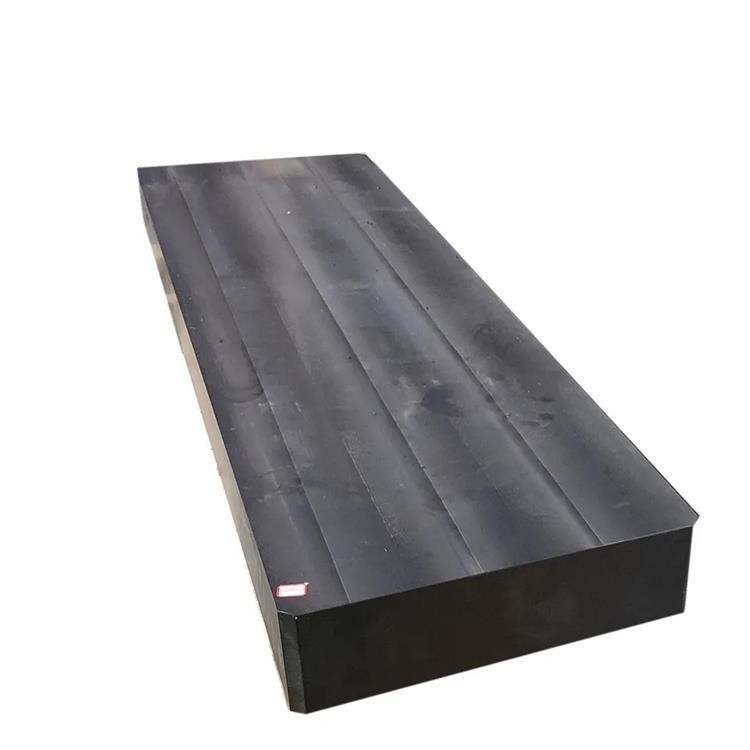
| Product Name: | Boron-containing Polyethylene Board | Material: | 5% Borated High Density Polyethylene |
|---|---|---|---|
| Color: | Natural Black | Size: | 1220mm*2440 Mm |
| Thickness: | 5-200mm | Elemental Boron: | 5% By Weight |
| Usage: | Nuclear Warships ,X-ray Rooms,Medical Vaults | ||
| Highlight: | Boron-containing Polyethylene Board,4x8 ft Borated Polyethylene board,Borated Polyethylene Neutron Shielding |
||
Recorded specification
This page describes the neutron shielding plate sold as Boron-containing Polyethylene Board by Tangyin Taixing Engineering Plastics Co., Ltd. It is a polyethylene board with boron compounded into the resin, used as a shielding layer in radiation rooms and around sources, and the values below are recorded for this listing.
| Manufacturer | Tangyin Taixing Engineering Plastics Co., Ltd. |
|---|---|
| Model Number | Boron-containing Polyethylene Board |
| Product name record | Boron-containing Polyethylene Board |
| Material record | 5 percent borated high-density polyethylene |
| Elemental boron | 5 percent by weight |
| Recorded size | 1220 mm x 2440 mm |
| Recorded thickness range | 5 mm to 200 mm |
| Colour | Natural black |
| Recorded usage | Nuclear warships, X-ray rooms, medical vaults |
| Certification | ISO9001 quality management system |
| Place of origin | China |
| Minimum order quantity | 50 kilograms |
| Price basis | Negotiable |
| Payment terms | T/T, Western Union |
| Supply ability | 5000 kilograms per month |
| Delivery time | 15-20 days after deposit received |
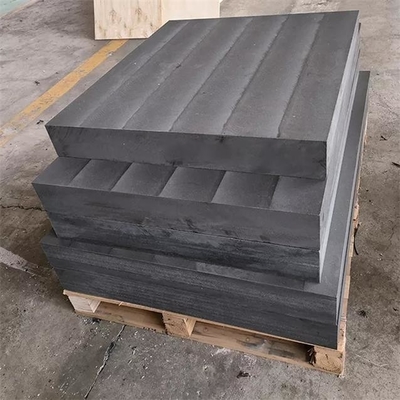
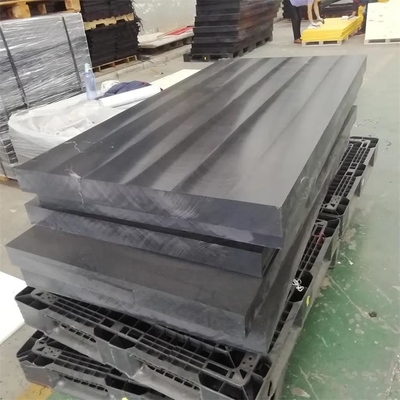
| Packaging | Wooden crate or pallet |
| Parameter | Recorded value for this listing | Status |
|---|---|---|
| Boron level | 5 percent by weight, stated as elemental boron | Fixed for this listing; the description quotes a 2 to 30 percent family range, which is not this listing's value |
| Plate size | 1220 mm x 2440 mm, the 4 x 8 ft format named in the listing title | Fixed; other formats are a separate quotation |
| Thickness | Within the recorded 5 mm to 200 mm range | Selected per shielding design |
| Colour | Natural black | Fixed by the boron-loaded compound |
| Attenuation performance | No attenuation figure is recorded for this listing | Must be calculated by the shielding designer |
Resolution of three recorded conflicts: the description's property table pairs notched Izod impact with a ft.lbs/in.2 unit, tensile strength at break with a percent unit and elongation at yield with a p.s.i. unit, so the unit column does not correspond to the property column and those values are not reproduced here as material data; the description also lists small formats of 700 x 500 mm and 1000 x 500 mm in 10 mm to 70 mm, while the attribute record fixes this listing at 1220 mm x 2440 mm, and the attribute record governs; and the description's 2 to 30 percent boron range is a family statement, whereas this listing is recorded at 5 percent by weight.
Construction
The Boron-containing Polyethylene Board from Tangyin Taixing Engineering Plastics Co., Ltd. is a single pressed plate with boron dispersed through the full 5 mm to 200 mm section, not a polyethylene skin over a boron core. That distinction decides how the plate is installed: a monolithic plate behaves the same at a cut edge as at its face, so a cut does not open an unshielded layer, but every joint between plates is still a place where the shielding has to be made continuous by overlap.
Shielding a neutron field is a two-step problem. Fast neutrons have to be slowed, and that is done by collisions with light hydrogen atoms, which is what a polyethylene matrix provides in quantity. Once slowed, the neutron is captured, and boron is the capturing element recorded for this board at 5 percent by weight. Because the polyethylene does the slowing and the boron does the capturing, the two have to be in the same plate and in intimate contact; a boron layer bonded to a plain plastic face would capture only what reached it.
This is also why the plate is judged on section mass rather than on a single number: the recorded thickness range runs from 5 mm to 200 mm for exactly that reason, and the designer selects the thickness that provides the hydrogen path the calculation calls for. No attenuation figure is recorded for this listing, so this page states no shielding performance and leaves the calculation to the radiation shielding designer.
Because the boron is compounded into the resin before pressing, a cut edge exposes the same loaded material as the face. A plate cut on site therefore does not need edge capping to remain shielding-continuous in the body. The recorded colour, natural black, is the colour of the loaded compound throughout, which is also a practical check: a cut face and a moulded face should look the same.
A shielding wall is only as good as its joints. Two plates butted edge to edge form a line where the section is interrupted, and a neutron streaming path exists along that line unless the plates overlap. The usual construction is a lap: a second layer offset across the joint, or a stepped edge detail agreed with the designer, so that no straight path passes through the assembly without crossing loaded material.
Overlap also solves the expansion problem. Polyethylene moves with temperature, and a joint closed tight will open elsewhere; an overlapped joint can move without opening a gap. Fasteners should therefore be slotted or set with clearance so the plate can move under the head instead of tearing the hole.
The plate is a shielding layer, not a structural wall. It is fixed to a structural substrate, typically with screws or bolts through clearance holes with washers to spread the clamp load, and it should be fully supported so that it is not carrying its own weight across a span. Where the plate is cut or drilled on site, the dust contains the boron compound and should be captured at the tool rather than left to settle, and the work area should be segregated while cutting is in progress.
| Construction point | Recorded basis | What it requires on site |
|---|---|---|
| Shielding body | 5 percent elemental boron by weight in high-density polyethylene | Plate thickness chosen by the designer, not by the supplier |
| Section | Monolithic plate within the 5 mm to 200 mm range | Cut edges need no capping to stay loaded |
| Plate format | 1220 mm x 2440 mm | Layout planned around the 4 x 8 ft module to minimise cut joints |
| Joints | Overlap required for shielding continuity | Lap or offset layer agreed before fixing |
| Fixing | Clearance holes into a structural substrate | Washers and slotted holes to allow movement |
| Machining | Cutting and drilling of a boron-loaded polymer | Dust captured at the tool, area segregated |

Application boundaries and installation
The recorded usage for the Boron-containing Polyethylene Board from Tangyin Taixing Engineering Plastics Co., Ltd. is nuclear warships, X-ray rooms and medical vaults. Around those three, the description of this family adds nuclear power plants, laboratories using radioactive installations, fluorography and radiation therapy rooms, and domestic use where background radiation is elevated.
It is the right layer wherever a neutron field has to be slowed and captured inside a room, a cabinet or a wall build-up where weight matters: a lead-lined construction is far heavier for the same volume, and polyethylene can be cut and fixed with ordinary plastic-working tools. It is also the right layer where the shielding has to be added to an existing structure, because a 1220 mm x 2440 mm plate can be brought through a normal door and fixed to a prepared frame.
It is not a gamma shield in its own right: the recorded material is a boron-loaded polyethylene, and the description frames the product as a neutron shielding material, so a design that needs gamma attenuation needs the shielding designer's own solution alongside it. It is not a structural panel and must not be used as a load-bearing wall, a floor or a support for equipment. It is also not a substitute for a qualified shielding calculation: the recorded 5 percent boron figure describes the composition of the plate, not the dose rate on the far side of a wall.
Set out the wall from the shielding drawing, working in whole 1220 mm x 2440 mm modules where possible so the number of joints is minimised. Fix the first layer to the substrate, then lay the second layer offset across the joints. Cut only what the layout requires, and cut with the dust controlled. Where a penetration passes through the wall, the plate has to be detailed around it so the shielding is not simply interrupted and left open.
Keep fasteners clear of the plate edge by a margin that leaves sound material around the hole, and use washers so the clamp load is spread rather than concentrated at the screw head. Do not over-tighten: polyethylene will creep under a concentrated clamp load and the fixing will loosen over time.
Confirm the plate thickness at several points against the drawing, that every joint is overlapped as detailed, that no plate is bridging a penetration without a detail, and that no fixing has pulled through. Confirm the delivered plate is the recorded natural black loaded compound and not a plain black polyethylene sheet, since the two look alike and only one of them carries the boron recorded here.
Manufacturer and supply position
Tangyin Taixing Engineering Plastics Co., Ltd. is an engineering plastics manufacturer combining production, sales, design and processing, with more than 20 years of experience, a plant area above 25,000 square meters and an annual output above 8,000 tons. This site also records Beijing Silk Road Enterprise Management Services Co. as the export-management entity for the same engineering-plastics business; the two names describe one manufacturing and export organisation, not two plants.
The boron-loaded compound is consolidated into plate on the imported production line and the moulding press, which is where a monolithic section with boron dispersed throughout is produced. Cutting to the 1220 mm x 2440 mm format and any edge detail are done on the CNC precise finishing machine and the CNC machining centres, with the carving machine for deeper features and the sander for surface conditioning. Because the plate is often cut to a room layout, AutoCAD based design support is used to turn a shielding drawing into a cutting list.
In-house inspection uses the abrasion tester, the universal mechanical tester and the oxygen index tester held in the company laboratory. Those instruments test the polymer; they do not measure neutron attenuation, and no attenuation test is recorded for this listing. A buyer who needs an attenuation figure needs it calculated or measured by a radiation physics service, not inferred from a polymer test.
The ISO9001 record on this site is a quality management system covering the manufacture of polyethylene sheet and machined plastic products. It is a system certification, not a product-by-product approval and not a material test report. No certificate number and no issuing body are recorded, and this page claims neither.
| Recorded term | Value | What it means for a shielding order |
|---|---|---|
| Minimum order quantity | 50 kilograms | A weight minimum, so a single plate trial is possible before a room is specified |
| Supply ability | 5000 kilograms per month | A full room is a planned order rather than a stock item; the monthly figure sets the phasing |
| Delivery time | 15-20 days after deposit received | Has to fit the room's construction programme, so the deposit date is a scheduling decision |
| Packaging | Wooden crate or pallet | Plates travel flat and protected; the crate is the on-site store before installation |
| Price basis | Negotiable | Quotation follows thickness, plate size, quantity and cutting |
| Payment terms | T/T, Western Union | Both recorded; the deposit releases production |
Buyer FAQ
The Boron-containing Polyethylene Board is recorded at 5 percent elemental boron by weight in a 5 percent borated high-density polyethylene compound, so the figure describes the composition of the plate rather than the performance of a wall. Tangyin Taixing Engineering Plastics Co., Ltd. compounds the boron into the resin before pressing, so the loading is present through the full section.
What that means for a design is that the plate supplies both halves of the neutron shielding mechanism in one material: the polyethylene hydrogen slows the neutron and the boron captures it. It does not mean a stated dose reduction, because no attenuation figure is recorded for this listing, and the wall thickness has to come from the shielding calculation.
A butted joint between two plates of the Boron-containing Polyethylene Board is a straight line where the section stops and starts again, and a neutron can travel along that line without crossing the full thickness. Tangyin Taixing Engineering Plastics Co., Ltd. supplies a 1220 mm x 2440 mm plate, so a room wall is always made of several plates and therefore always has joints.
The fix is a lap: a second layer offset across the joint, or a stepped edge agreed with the designer, so any path through the assembly crosses loaded material. An overlap also lets the plates move with temperature without opening a gap, which a hard-butt joint cannot do.
No capping is needed for the body of the plate. The Boron-containing Polyethylene Board is a monolithic loaded plate pressed from a compounded resin, so a cut face exposes the same material as the moulded face; Tangyin Taixing Engineering Plastics Co., Ltd. records the colour as natural black throughout, which is what allows a cut face and a moulded face to be compared on site.
What a cut edge does need is a clean, square finish so the plates close up properly at a lap, and a light easing so nobody handling the plate is cut by a sharp polymer edge. The cut itself should be made with the boron-bearing dust captured at the tool.
The Boron-containing Polyethylene Board is a shielding layer, so it is fixed to a structural substrate rather than carrying load itself. Tangyin Taixing Engineering Plastics Co., Ltd. supplies the plate flat and cut to the 1220 mm x 2440 mm format, and the fixing detail comes from the room drawing: clearance holes, washers to spread the clamp load, and enough edge margin to leave sound material around each hole.
Two practical points decide whether the fixing survives. Do not over-tighten, because polyethylene creeps under a concentrated clamp load and the joint loosens; and do not fix the plate rigid at every hole, because the plate moves with temperature and needs some clearance to do so without tearing.
The recorded thickness range for the Boron-containing Polyethylene Board is 5 mm to 200 mm, and the thickness is a design output rather than a catalogue choice: it follows from the neutron field, the distance to the occupied area and the rest of the wall build-up. Tangyin Taixing Engineering Plastics Co., Ltd. can press anywhere inside that recorded range, and the plate is then cut from the 1220 mm x 2440 mm format.
A thicker plate is not automatically a safer wall, because the joint detail and the penetrations matter as much as the section. The sensible approach is to fix the thickness from the shielding calculation first, then lay out the room in whole plates of that thickness so that the number of joints is minimised.
The minimum order quantity recorded for the Boron-containing Polyethylene Board is 50 kilograms, which is a weight minimum rather than a plate count. That is small enough for a buyer to take one plate of a chosen thickness as a handling and cutting trial before committing a room to the material, which matters because the plate is heavier and stiffer than a plain polyethylene sheet of the same size.
Tangyin Taixing Engineering Plastics Co., Ltd. quotes negotiable pricing, so thickness and quantity set the quotation. With supply ability at 5000 kilograms per month, a full room is a planned order that should be phased against the construction programme rather than treated as a stock purchase.
Natural black is the only colour recorded for the Boron-containing Polyethylene Board, and a plain black polyethylene sheet looks the same, so identification has to come from the documentation and the label rather than from appearance. Tangyin Taixing Engineering Plastics Co., Ltd. ships in a wooden crate or on a pallet, and the crate label is where the 5 percent boron declaration and the plate thickness should be read.
Keeping the label with the plate until it is installed is therefore part of the job, not paperwork for its own sake. Once plates are cut and mixed on a site, a black offcut could be either material, and the only safe assumption is that an unlabelled piece cannot be used in a shielding build-up.
The recorded delivery time for the Boron-containing Polyethylene Board is 15-20 days after deposit received, so the production clock starts when the deposit is paid and not when the drawing is issued. Tangyin Taixing Engineering Plastics Co., Ltd. accepts T/T and Western Union, and the deposit route chosen is what places the order in the schedule.
Because a shielding room is usually on the critical path of a hospital or laboratory fit-out, the plate order should be released once the shielding thickness is frozen, not after the frame is complete. The crate of wooden construction also needs a dry, flat store on site, since a plate left standing on edge for weeks will take a set.
Receiving checklist
Contact Person: Mr. Sales
Tel: +86 152 1104 0646


 English