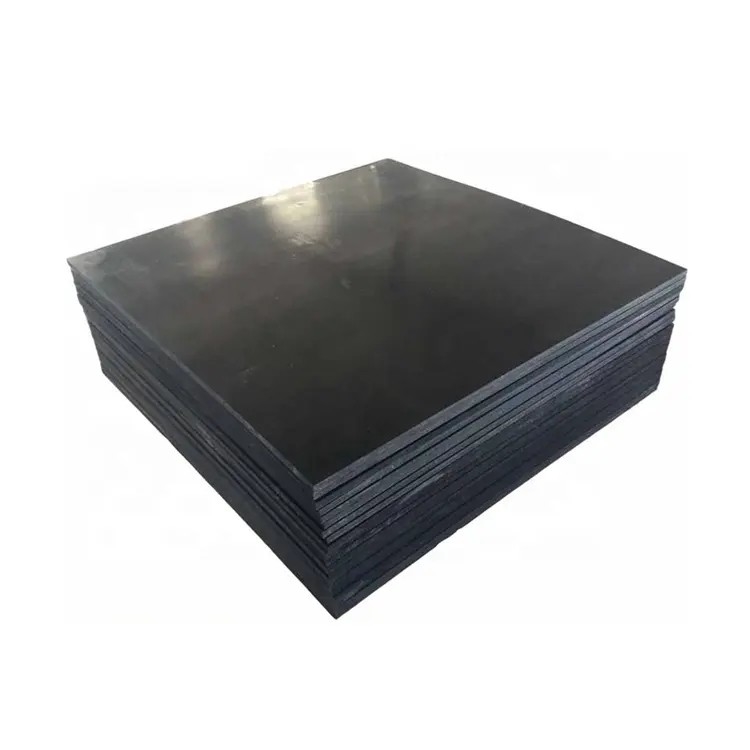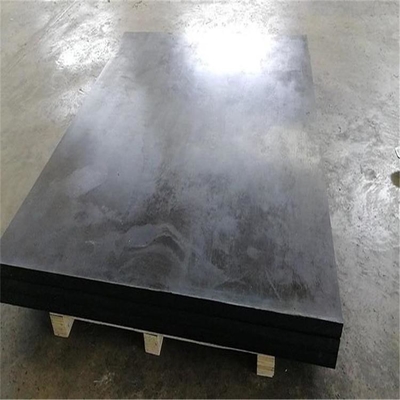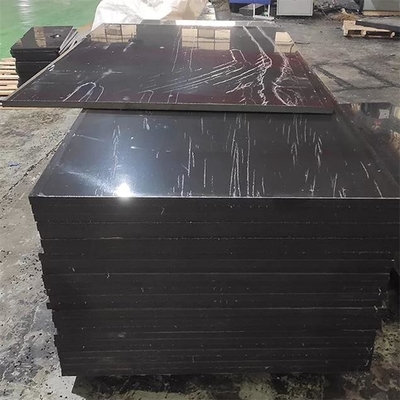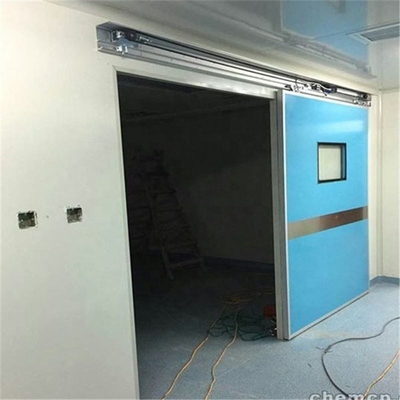

|
Product Details:
|
| Item:: | Radiation Protection Borated Polyethylene Sheet | Material: | 100% Virgin PE |
|---|---|---|---|
| Color:: | Natural White, Black, Yellow | Size:: | 1220mm*2440 Mm |
| Thickness:: | 5-200mm | Density:: | 0.94-0.98 G/cm3 |
| Processing Service:: | Cutting, Moulding | ||
| Highlight: | Boron polyethylene shield,Radiation borated polyethylene sheets,Radiation Shielding Door Boron Polyethylene |
||
Section 1
The listing title records a 3% boron loading for this shielding board, supplied by Tangyin Taixing Engineering Plastics Co., Ltd. under model Boron polyethylene shield. The attribute records hold the plate geometry, the polymer basis and the commercial terms; the boron figure appears in the title only, and no assay, certificate or test report for boron content is recorded anywhere in this package.
| Item | Radiation protection borated polyethylene sheet |
|---|---|
| Model Number | Boron polyethylene shield |
| Material | 100% virgin PE with boron loading, 3% recorded in the listing title |
| Colour | Natural white, black, yellow |
| Recorded size | 1220 x 2440 mm |
| Thickness | 5-200 mm |
| Density | 0.94-0.98 g/cm3 |
| Processing service | Cutting, moulding |
| Certification | ISO9001 quality management system |
| Place of origin | China |
| Minimum order quantity | 50 kilograms |
| Price basis | Negotiable |
| Payment terms | T/T, Western Union |
| Supply ability | 5000 kilograms per month |
| Delivery time | 15-20 days after deposit received |
| Packaging | Wooden crate or pallet |
The description adds a cut-plate schedule that a shielding door usually needs, because a door leaf is built from pieces rather than from one 1220 x 2440 mm sheet. Those plates are listed below exactly as recorded.
| Plate footprint | Thickness set | Status for this listing |
|---|---|---|
| 700 x 500 mm | 10, 20, 25, 30, 40, 50, 60, 65, 70 mm | Description-listed cut size |
| 1000 x 500 mm | 10, 20, 25, 30, 40, 50, 60, 65, 70 mm | Description-listed cut size |
| 1220 x 2440 mm | 5-200 mm | Governing attribute record, supplied as full plate or cut down |
| Property as printed | Result as printed | Reading rule applied here |
|---|---|---|
| Notched Izod Impact | No Break | Quoted as printed; no numerical value is claimed |
| Vicat Softening Temp. | 89 deg C (192 deg F) | Quoted directly; this is the only temperature figure recorded for the board |
| Tensile Strength @ Break | >140 | Value recorded but its unit cell reads % - not used as a strength claim |
| Elongation @ Yield | >300 | Value recorded but its unit cell reads p.s.i. - not used as an elongation claim |
| Shore Hardness | Shore D 64 | Quoted directly |
| Flexural Modulus | 3000 p.s.i. | Quoted directly |
Data conflict resolved for the buyer: in the source table the unit column of the tensile and elongation rows is shifted by one row, so a tensile strength is printed against a percentage unit and an elongation against a pressure unit. Those two rows are reproduced above as recorded but are not used as engineering values; the Vicat figure, the Shore D figure, the flexural modulus and the "No Break" impact result are used, because their rows are internally consistent.

Section 2
A borated polyethylene shield works on two mechanisms that have to sit in the same plate. The hydrogen in the polyethylene chain moderates fast neutrons by collision, and the boron absorbs the thermalised neutrons that remain, which is why the plate is specified by thickness and boron loading together rather than by thickness alone. The recorded density band of 0.94-0.98 g/cm3 is the hydrogen-density proxy for this board: the higher the density inside that band, the more hydrogen nuclei occupy the same millimetre of thickness.
Nothing in this package records a laminated or clad build. The recorded construction is a moulded polyethylene plate, 1220 x 2440 mm, finished by cutting and moulding, with the boron loading carried in the polymer. That matters at a joint: a monolithic plate has one continuous cross-section across its face, so two adjacent plates butted together present a straight seam that can be overlapped and offset, whereas a clad board would also have an interlayer line to manage. Because the plate is homogeneous, the cut edges are the same material as the face and do not need edge sealing before installation.
Inside the 5-200 mm band a shielding door leaf usually takes a mid-band plate for stiffness and a set of thinner plates where the leaf has to close against a frame. The Vicat softening figure of 89 deg C recorded for this material is the ceiling that matters when the board is mounted near a door actuator or a light fitting, and the recorded flexural modulus of 3000 p.s.i. explains why a long unsupported span of thin board sags: the plate carries its own weight across a door opening unless it is backed by the door frame or a steel plate.
The board is cut and drilled after moulding, so a shielding door build always ends with machined edges. A clean, square, unsmeared cut edge is what allows the next plate to be butted tightly; a ragged edge from a dull blade leaves a gap that has to be filled and turns a simple overlap into a site repair. Holes for door fixings should be drilled, not punched, because a punched hole in a 0.94-0.98 g/cm3 polyethylene plate leaves a stress ring that opens up when the bolt is tightened.
Section 3
The description names four service areas for this board: nuclear power plants and nuclear-powered ships, medical rooms including X-ray rooms, treatment rooms using fast neutrons, fluorography rooms and radiation therapy rooms, laboratories using radioactive installations, and domestic rooms where the local background is raised. All four are shielding or lining duties against a defined source, which is why the plate is bought against a shielding calculation rather than against a thickness preference.
This board is a neutron-shielding and lining material, and the recorded 3% boron loading is the only boron figure in the package. No attenuation figure, no half-value layer, no transmission test and no radiation-source qualification is recorded for this listing, so no page on this listing can tell a buyer how much dose a given thickness removes. The shielding thickness and the coverage area have to come from the project radiation physicist, and this manufacturer supplies plate that meets the recorded geometry, density and loading. A second boundary is fire: no fire rating or reaction-to-fire class is recorded, so the board should not be accepted on a fire-rated door or a fire compartment on the strength of this page.
The description also contradicts itself on mounting style. One paragraph states that the plate is used as a gasket and electrical insulation inside a housing rather than as a portable shield, while a later paragraph suggests using a suitable plate size as a mobile shield. This page follows the specification paragraph, treating the board as a fixed lining, gasket or door infill, and reads the mobile-shield sentence as an application suggestion only.
Fasten through the board into the door leaf or the wall frame with washers or a clamping strip under each head, and keep the fasteners out of the shielding plane where possible: a steel bolt through a shield is a path with different attenuation from the board, and a dense array of bolts is a dense array of paths. Where a seam falls inside the protected area, overlap the two plates and offset the seam from any seam in the layer behind it, so that no straight line runs through the full shield thickness. Leave the board free to expand at its edges rather than pinning all four sides hard against a steel frame.
Check that each plate is flat against its backing and not bridging a weld or a stiffener; check that every seam has the designed overlap; check that no fixing has been countersunk so deep that the remaining board over the head is thinner than the rest of the shield; and check the cut faces for a tight butt where a plate meets a frame.
Section 4
Tangyin Taixing Engineering Plastics Co., Ltd. produces this board as one item in a wider engineering-plastics range that the company states as UHMWPE board, synthetic ice rink, PE marine fender, outrigger pad, UHMWPE liner, plastic conveyor roller, UHMWPE special-shaped parts, HDPE sheet, HDPE ground protection mat and dual colour HDPE sheet. The company records more than 20 years of experience, a plant area above 25,000 square meters and an annual output above 8,000 tons. The export-management entity Beijing Silk Road Enterprise Management Services Co. appears alongside the manufacturer name on the company profile page and in the site footer as the second recorded name of the same manufacturing and export organisation.
The plate is formed on the recorded imported production line and moulding press, where the boron-loaded compound is consolidated into the 1220 x 2440 mm format, and it is then cut to the door schedule on the CNC precise finishing machine, carving machine or CNC machining centres, with AutoCAD based design support for the cut shapes. For a shielding door the machining step is where the 700 x 500 mm and 1000 x 500 mm pieces in the description schedule come from, and it is also where the square edge that a tight butt joint depends on is produced. The in-house laboratory holds an abrasion tester, a universal mechanical tester and an oxygen index tester; the oxygen index instrument is the one that speaks to the combustion behaviour of a polyethylene board, though no result from it is recorded for this listing.
This listing is sold by weight: minimum order 50 kilograms, supply ability 5000 kilograms per month, delivery 15-20 days after deposit received, wooden crate or pallet packaging, T/T or Western Union, negotiable price. A weight-based minimum means the entry order is a small stack of plates at working thickness rather than a single full sheet, and the plate count is fixed at quotation against the density actually supplied. The 5000 kilograms per month ceiling is the figure to watch on a multi-door project: a shielding programme that runs past that tonnage in a month has to be phased, and the phasing should be agreed before the door frames are set rather than after.
ISO9001 is recorded for this listing. It is a quality management system certification covering the manufacture of polyethylene sheet and machined plastic products, not a product-by-product approval and not a material test report. No certificate number, issuing body or scope statement beyond that level is recorded, and no boron assay certificate exists in this package.
The factory background, including plant area and annual output, is stated in the manufacturer profile section of this site.
Section 5
Boron and thickness do different jobs in the Boron polyethylene shield. The polyethylene moderates fast neutrons and the boron captures the thermalised ones, so a thicker plate slows more neutrons before they reach the boron, while a higher boron loading captures more of those that arrive.
The listing title records 3% boron and the attribute record allows 5-200 mm of thickness from Tangyin Taixing Engineering Plastics Co., Ltd. Because no attenuation or transmission result is recorded, the thickness for a given source has to come from the project shielding calculation, and this board is supplied to that calculated thickness.
It is a single moulded plate. The recorded processing for the Boron polyethylene shield is cutting and moulding on a 1220 x 2440 mm format, and no interlayer, cladding or bonded build appears anywhere in the record.
A homogeneous plate gives the installer one material across the face and across the cut edge, so seams can be butted and overlapped without worrying about which layer faces the source. Tangyin Taixing Engineering Plastics Co., Ltd. cuts the plate from the same 0.94-0.98 g/cm3 stock whether the order is a full sheet or a 700 x 500 mm door infill.
Overlap the plates and offset that seam from any seam in the layer or structure behind it, so no straight path runs through the full shield thickness. A butt joint alone leaves a line of reduced thickness that has to be covered by a backing strip of the same board.
The Boron polyethylene shield is supplied in 1220 x 2440 mm plates and in the description's 700 x 500 mm and 1000 x 500 mm cut sizes, which is what allows a door leaf to be laid out with staggered joints. Tangyin Taixing Engineering Plastics Co., Ltd. can cut the pieces to the door schedule so the overlaps are designed rather than improvised on site.
Fasten through the board into the leaf with a washer or clamping strip under each head, and keep the board flat against the leaf so it is supported over its whole face rather than only at the bolts. A 3000 p.s.i. flexural modulus plate will sag across an unsupported opening if it is fixed only around the perimeter.
Keep the board free at the edges instead of pinning all four sides hard, so the plate can move with temperature without buckling away from the leaf. On a door that swings, the Boron polyethylene shield from Tangyin Taixing Engineering Plastics Co., Ltd. should also be checked for fastener heads that could foul the frame as the leaf closes.
Yes, but drill rather than punch. A punched hole in a 0.94-0.98 g/cm3 polyethylene plate leaves a stressed ring that opens when the bolt is tightened, while a drilled hole with a clean margin holds its bearing.
Cut the plate with a sharp blade or a saw that produces a square edge, because the seam quality of the Boron polyethylene shield depends on the cut face being flat. Machining dust from a boron-loaded board should be captured at the tool and the operator should use respiratory protection; Tangyin Taixing Engineering Plastics Co., Ltd. supplies the plate cut to the 700 x 500 mm or 1000 x 500 mm schedule to reduce site cutting.
The minimum for the Boron polyethylene shield is recorded in kilograms, not pieces, so it is met by a small stack of plates at working thickness rather than by a single full sheet. The exact plate count is fixed at quotation because the weight of a 1220 x 2440 mm plate depends on the thickness ordered inside the 5-200 mm band and on the density supplied inside 0.94-0.98 g/cm3.
For a single shielding door that is a convenient entry quantity, and it means a trial door can be built and measured before a full room is specified. Tangyin Taixing Engineering Plastics Co., Ltd. quotes a supply ability of 5000 kilograms per month, so the door-by-door approach stays inside capacity.
Delivery is recorded as 15-20 days after deposit received, with packaging in a wooden crate or on a pallet. A shielding plate has to arrive flat, because a plate that has taken a permanent bow in a container will not sit tight against a door leaf.
That makes the crate and the deposit date the two dates to plan around: the cut schedule has to be released before the deposit for the 15-20 day window to cover cutting as well as moulding. Tangyin Taixing Engineering Plastics Co., Ltd. packs the Boron polyethylene shield for sea freight, so the crate should be opened and the plates stored flat and out of direct sun on arrival.
ISO9001 is recorded here as a quality management system certification covering the manufacture of polyethylene sheet and machined plastic products. It is a system certification, not a product approval, and it is not a material test report for the Boron polyethylene shield.
No certificate number, issuing body or scope statement beyond the system level is recorded, and no boron content assay or attenuation test is recorded in this package. A project that needs an assay or a shielding test result should specify it as a separate requirement when ordering from Tangyin Taixing Engineering Plastics Co., Ltd. rather than assume the certificate covers it.
Section 6
Contact Person: Mr. Sales
Tel: +86 152 1104 0646


 English