
|
Product Details:
|
| Item:: | High Impact Strength Wear-resistant UHMWPE Sheet | Material: | 100% Virgin PE |
|---|---|---|---|
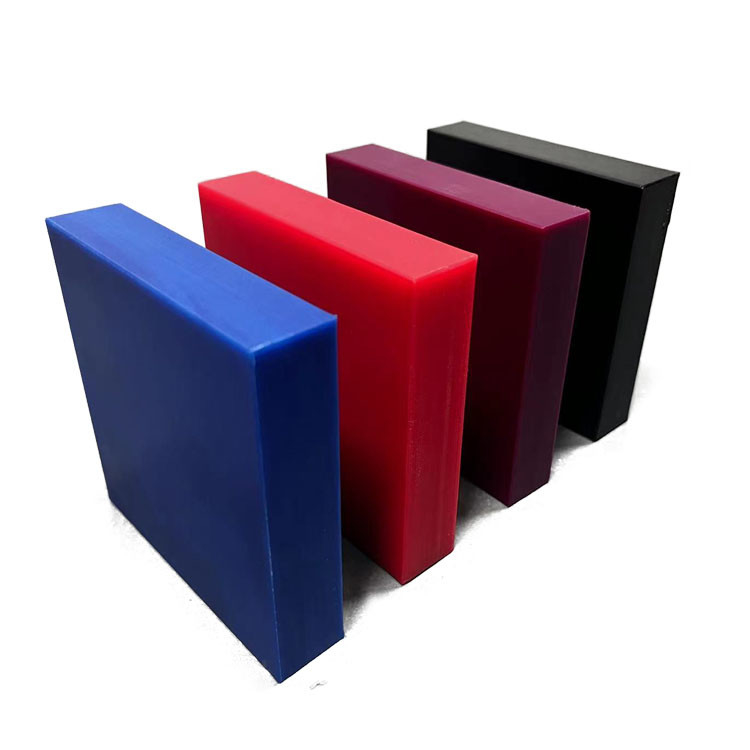
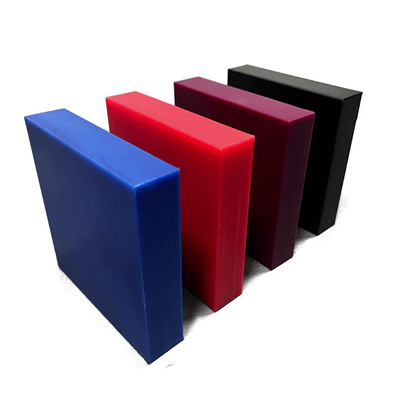
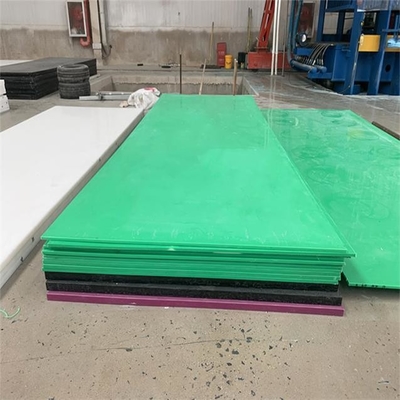
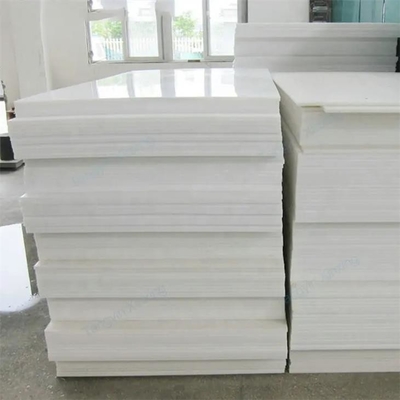
| Color:: | Natural White, Black, Yellow | Size:: | 1220mm*2440 Mm |
| Thickness:: | 5-200mm | Density:: | 0.94-0.98 G/cm3 |
| Processing Service:: | Cutting, Moulding | ||
| Highlight: | UHMWPE Sheet,2 Inch UHMWPE Sheet,uhmw ultra high molecular weight polyethylene sheet |
||
Listing 37326122 - UHMWPE Plastic Sheet
This page covers the ultra-high molecular weight polyethylene sheet that Tangyin Taixing Engineering Plastics Co., Ltd. catalogues under model UHMWPE Sheet, in the 1220 mm x 2440 mm format and the 5 mm to 200 mm thickness band recorded against this listing. The table is built from the attribute records only; where the original description states a different value, the attribute record is used and the difference is explained underneath the table.
| Attribute | Recorded value for model UHMWPE Sheet |
|---|---|
| Manufacturer | Tangyin Taixing Engineering Plastics Co., Ltd. |
| Model Number | UHMWPE Sheet |
| Item description | High impact strength wear-resistant UHMWPE sheet |
| Material | UHMWPE, recorded as 100% virgin PE |
| Sheet size | 1220 mm x 2440 mm |
| Thickness | 5 mm to 200 mm |
| Density | 0.94-0.98 g/cm3 |
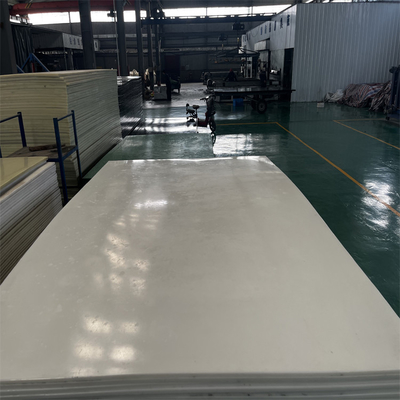
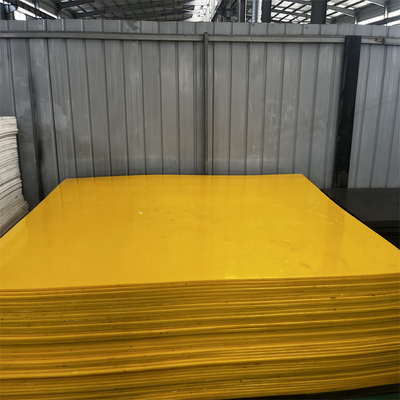
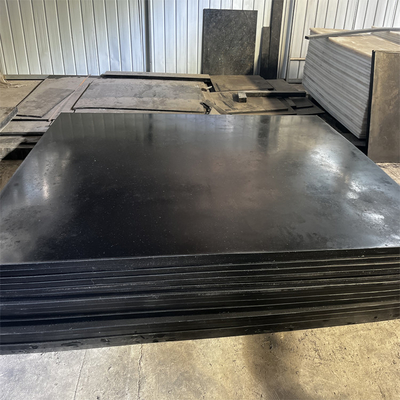
| Colour | Natural white, black, yellow |
| Processing service | Cutting, Moulding |
| Certification | ISO9001 quality management system, system level only |
| Place of origin | China |
| Minimum order quantity | 1000 kilograms |
| Price basis | Negotiable |
| Payment terms | T/T, Western Union |
| Supply ability | 500,000 kilograms per month |
| Delivery time | 15-20 days after deposit received |
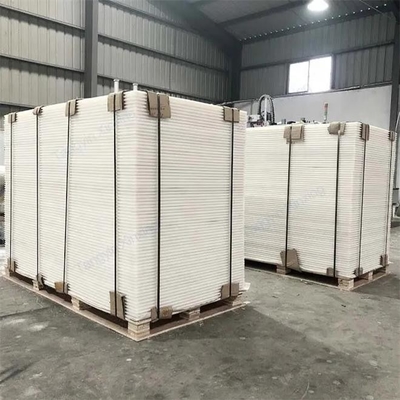
| Packaging | Wooden crate or pallet |
One conflict needs resolving in writing. The description attached to this listing carries a performance table whose "Common Type" column states a density of 0.96-1.0 g/cm3, while the attribute record for model UHMWPE Sheet states 0.94-0.98 g/cm3. The attribute record is authoritative, so 0.94-0.98 g/cm3 is the density used on this page, and the description table is treated as a multi-type reference that does not identify which type this listing supplies. The same description table also splits material into Common, Enhanced Type I and Enhanced Type II columns with different strength values; because this listing records no type designation, this page quotes no strength figure from that table and states only the properties that the attribute record and the running description text support.

| Parameter | Recorded value | Ordering consequence |
|---|---|---|
| Plate format | 1220 mm x 2440 mm | The plate is the quoting unit for cut parts; a part larger than this footprint cannot be produced in one piece from this size. |
| Thickness band | 5 mm to 200 mm | Thickness is the main driver of plate mass, of how the plate is handled, and of how it is fixed to a substrate. |
| Density band | 0.94-0.98 g/cm3 | Density plus thickness plus plate area sets the shipping weight, and the 1000 kg minimum order is measured against that weight. |
| Colour options | Natural white, black, yellow | Colour is a property of the whole section, so a cut edge presents the same colour as the face. |
| Processing | Cutting, Moulding | A cut profile and a moulded geometry can both be quoted against model UHMWPE Sheet. |
Construction
Model UHMWPE Sheet from Tangyin Taixing Engineering Plastics Co., Ltd. is a monolithic slab, not a laminate and not a coated panel. The 5 mm to 200 mm band is produced from one material across the whole section, which is why the cut edge, the wearing face and the fixing face all present the same polyethylene. That single fact drives most of the engineering behaviour described below.
At the thin end of the 5 mm to 200 mm band, the plate is a facing material: it follows the substrate it is fixed to, it has almost no spanning ability, and its wear life is bounded by how much section is available before the fasteners stand proud. At the thick end, the same material becomes a structural slab: it spans between supports, it absorbs impact by local deformation rather than by transferring the blow into the substrate, and its edge becomes thick enough to machine a rebate or a tongue into. The 1220 mm x 2440 mm format stays constant across that band, so the variable that changes the installation design is thickness, not footprint.
Because the recorded density band is 0.94-0.98 g/cm3, mass scales directly with thickness. A thick plate from this listing is therefore a two-person or mechanical lift and a thin plate is not, and the wooden crate or pallet packaging recorded for this model is what carries that mass in transit. The package records no mass per plate, so the buyer should compute the shipment weight from thickness, format and density before booking freight.
The listing records the item as a high impact strength, wear-resistant UHMWPE sheet and the description states a self-lubricating character and a low coefficient of friction. The description also names the application problem the material is chosen to solve: sticking and bridging in coal bunkers, silos, mixing barrels, chutes and dump trucks. In construction terms that means the plate is normally installed as the sliding face of a hopper or a truck bed, fixed to a steel or concrete backing, with the free face exposed to the flowing bulk material.
Two details decide whether that face works. The first is fastener head treatment: any bolt or screw head that stands above the sliding face becomes a catch point where material lodges and wear concentrates, so countersunk or recessed fixing is the normal detail and the head should finish flush or slightly below the face. The second is joint geometry: adjacent plates should meet with the direction of flow so that a leading edge does not present a step, because a step is where a scraper or a frozen lump catches.
Cutting and moulding are both recorded for model UHMWPE Sheet. Cutting produces the outline, the cut-outs and the fixing holes; moulding produces formed geometry. The material is a high molecular weight grade, which behaves differently from ordinary HDPE at the tool: it is tough enough that a blunt cutter rubs and heats the edge instead of shearing it cleanly, and the resulting smeared edge on a sliding face is a wear initiation point. On a 200 mm section the cut edge is also a large exposed area, so the edge should be regarded as a finished face and inspected as such, not treated as offcut.
No edge squareness value, no surface roughness figure and no hole tolerance are recorded for this listing. This page therefore sets no numeric acceptance limit and instead gives visual and dimensional checks in the receiving section that can be run with a square, a tape and a straight edge.
The description states that the material works in an environment from 90 deg C down to minus 60 deg C for long periods. That statement is carried here as the description's own wording, not as an attribute record, and this listing records no test method for it. Where a process temperature is close to either end of that statement, the buyer should have the duty condition confirmed at quotation instead of relying on the sentence.
| Construction element | How it is formed on model UHMWPE Sheet | Failure mode to design against |
|---|---|---|
| Section | Monolithic slab, 5 mm to 200 mm, density 0.94-0.98 g/cm3 | Choosing a section too thin for the wear depth the duty allows |
| Sliding face | Plain plate face, cut to the required outline | Fastener heads standing proud and collecting material |
| Joints | Plate-to-plate butt joints arranged along the flow direction | A leading edge stepped against the flow, catching a scraper or a lump |
| Fixing holes | Drilled during the recorded cutting operation | Hole too tight for thermal movement, cracking at the hole |
| Moulded features | Formed geometry produced under the recorded moulding service | Local wall thinning where material is drawn out of the plate |
Boundaries
The description for model UHMWPE Sheet names coal bunkers, silos, mixing barrels, chutes and dump trucks, and extends the use to coal, power and steel industries. Those are flowing-bulk duties where a low-friction, wear-resistant face replaces a steel face that was sticking or wearing through. The boundaries below follow from the recorded thickness band, the recorded density band and the fact that no load rating and no fixing schedule are recorded.
A plate in the 5 mm to 200 mm band fixed over a prepared substrate suits a sliding face on a hopper or chute, a replaceable wear liner on a truck bed, a low-friction deck where product has to discharge by gravity, and an impact face where a lump load arrives on a surface that must absorb it without denting. Tangyin Taixing Engineering Plastics Co., Ltd. records cutting for this model, so the plate can arrive as a shaped liner panel rather than a rectangle that has to be cut on site.
Model UHMWPE Sheet carries no recorded load rating, no recorded design stress and no recorded fire or UV performance, so it should not be substituted for a rated structural pad, a lifting component or a fire-rated lining without a separate engineering decision. The low-friction face that makes it good in a chute also makes it a poor walkway surface unless the surface is textured, and no texture is recorded for this listing. Where the duty is a hot process line, the temperature statement in the description is not a substitute for a duty-specific confirmation.
Prepare the substrate first, because a plate that follows its substrate will reproduce every high spot. Then establish the fixing pattern around the plate perimeter and an internal grid, keeping fixings away from the unsupported middle of a span on thin sections. Use clearance holes rather than tight holes, and where the plate is exposed to temperature swing, slot the holes in the direction of movement so the plate can slide under the washer instead of being restrained. On a sliding face, countersink every head and check flushness with a straight edge before the plate is put into service.
Handle the plate flat. A 1220 mm x 2440 mm slab at the thick end of the band is heavy, and lifting it by one edge puts a bending load into a section that has no recorded flexural rating in this listing. Store on a flat pallet, not on battens that leave the plate bridging, and do not stand a thin plate on edge against a wall for a long period.
Confirm the delivered thickness against the 5 mm to 200 mm band and against the ordered value, confirm the outline against the drawing at both diagonals, confirm the colour against the agreed name from natural white, black and yellow, and confirm that the sliding face has no raised fastener seat or proud weld-free joint. A plate that is flat, correctly sized and correctly coloured but has one proud fixing will still bridge material at that point.
Manufacturer
Tangyin Taixing Engineering Plastics Co., Ltd. is the manufacturer of model UHMWPE Sheet. The company describes itself as an engineering plastics manufacturer combining production, sales, design and processing, with more than 20 years of experience, a plant area of more than 25,000 square meters and annual output of more than 8,000 tons. UHMWPE board is the first item on its stated product list, which places this model in the plant's core range rather than at the edge of it.
The same organisation is also named in the company profile and site footer as Beijing Silk Road Enterprise Management Services Co., which runs the same engineering-plastics business. That is one manufacturing and export organisation under two recorded names, and the plant behind model UHMWPE Sheet is the same either way.
The plant lists an imported production line, a moulding press machine, a CNC precise finishing machine, a carving machine, a sander machine, CNC machining centres and AutoCAD based design support. For model UHMWPE Sheet the plate is formed on the production line, the recorded cutting service is executed on the saw and CNC equipment, and the recorded moulding service is served by the moulding press. Design support is relevant because the plate can be nested: a drawing sent at quotation stage lets the plant return a cutting layout instead of a plain sheet price, and that layout is what controls offcut on a 1220 mm x 2440 mm plate.
The in-house laboratory equipment listed by the company is an abrasion tester, a universal mechanical tester and an oxygen index tester. These instruments are the ones that would be used to check a polyethylene sheet or a machined plastic product, and their presence describes what the plant can measure. No report from them is recorded against model UHMWPE Sheet, so a buyer needing a measured value on a delivered lot should request it as a separate item and agree it before the 15-20 day delivery window begins.
The listing records ISO9001, described here as a quality management system covering the manufacture of polyethylene sheet and machined plastic products. It is a system certification and not a product-by-product approval, and it is not a material test report. The record contains no certificate number and no issuing body, so neither is printed on this page. The description image filed under a certificate heading is an image published with the listing, and no property is claimed from it here.
Model UHMWPE Sheet is sold against a minimum order of 1000 kilograms, not a piece count, with a recorded supply ability of 500,000 kilograms per month, delivery of 15-20 days after deposit, T/T or Western Union payment, negotiable pricing and wooden crate or pallet packaging. The weight-based minimum is the important one: the number of plates in a minimum order depends entirely on thickness, so a buyer working in 5 mm sheet gets a very different plate count from a buyer working in 100 mm sheet for the same 1000 kilograms. Supply ability sits far above the minimum, so the binding constraint is the 15-20 day window after deposit, and the deposit timing therefore sets the delivery date more than the order size does. Wooden crate or pallet packaging is the appropriate protection for a dense slab and is a real advantage over a bag for a plate that must arrive flat.
Buyer FAQ
For model UHMWPE Sheet, the attribute record states 0.94-0.98 g/cm3 and the description's performance table states 0.96-1.0 g/cm3 in its Common Type column. Tangyin Taixing Engineering Plastics Co., Ltd. is held to the attribute record on this page, so 0.94-0.98 g/cm3 is the density used for quoting, for weight calculation and for any receiving check.
The overlap between the two bands is the practical answer for most buyers: a delivered plate inside 0.94-0.98 g/cm3 satisfies the attribute record regardless of what the description table says. If your design calculation depends on a density above 0.98 g/cm3, the attribute record does not support it and the value must be confirmed in writing against model UHMWPE Sheet before the order is placed, because a heavier plate changes both the shipped weight and the fixing load.
Tangyin Taixing Engineering Plastics Co., Ltd. records one thickness band, 5 mm to 200 mm, for model UHMWPE Sheet, and the band spans two different structural behaviours. At 5 mm the plate is a facing: it must sit on a continuous substrate, it does not span, and load passes almost directly into the substrate through the plate. At 200 mm the same material is a slab that spans between supports and distributes a point load through its own section before the substrate sees it.
Because no load rating is recorded for model UHMWPE Sheet, the choice of thickness has to be made from the duty, not from a catalogue table. State the support spacing, the lump size and the expected impact on the quotation, and let the plant answer with a thickness inside 5 mm to 200 mm plus a fixing pattern. A thickness chosen only to match a worn-out steel plate usually gives either a plate that is too thin to span or one that is far heavier than the structure needs.
The description for model UHMWPE Sheet from Tangyin Taixing Engineering Plastics Co., Ltd. names coal bunkers, silos, mixing barrels, chutes and dump trucks as the duties the material is chosen for, which is a sliding-face duty rather than a structural one. The construction answer is a plate fixed over the existing steel or concrete face with the free surface exposed to the flowing material, cut to the hopper geometry under the recorded cutting service, so that the plate lands in one piece where the geometry allows.
Fixing decides the result on model UHMWPE Sheet, and Tangyin Taixing Engineering Plastics Co., Ltd. records the plate without a fixing schedule, so the detail is the buyer's. Countersink every fastener so the head finishes flush with or just below the sliding face, because a proud head is where material lodges and where wear starts. Arrange plate joints along the direction of flow so no leading edge faces the material, and leave a small gap at each joint rather than butting plates hard, since the material moves with temperature and a hard butt joint in a restrained plate will buckle. Confirm the joint direction against the actual discharge path before drilling.
Tangyin Taixing Engineering Plastics Co., Ltd. records the material of model UHMWPE Sheet as 100% virgin PE. In construction terms that is a statement about the input, and its visible consequence is consistency: a plate made from virgin material has no regrind streaks, no colour mottling and no hard inclusions, so a cut edge presents a uniform section from face to face. On a sliding face, an inclusion at the edge is where a chip starts.
The record does not name a molecular weight figure, a grade designation or a test method, and this page does not supply one. What a buyer can check at receiving without a laboratory is the uniformity of the cut edge and the uniformity of colour across the plate. Any departures from that, such as visible flow lines or a colour that varies across the 1220 mm x 2440 mm face, should be raised before the plate is installed so that the question is answered against the delivered plate rather than after it is in service.
The processing service recorded for model UHMWPE Sheet is cutting and moulding, and Tangyin Taixing Engineering Plastics Co., Ltd. lists CNC precise finishing machines, a carving machine and CNC machining centres, which are the equipment that produces an outline with holes and cut-outs from a 1220 mm x 2440 mm plate. A straight-edged panel is nested and sawn; a panel with a hopper profile, a discharge opening or a bolt pattern is nested and routed.
The drawing should carry one datum, the thickness ordered inside the 5 mm to 200 mm band, the hole diameters, and the position of every hole relative to that datum. Two details are worth stating explicitly on the drawing for model UHMWPE Sheet: whether holes are to be drilled to clearance for the fastener or to a tighter fit, and whether countersinks are required, because a countersink that is not called out will not be produced and the sliding face will then have proud heads on site.
Tangyin Taixing Engineering Plastics Co., Ltd. records a minimum order of 1000 kilograms for model UHMWPE Sheet, with a supply ability of 500,000 kilograms per month. A weight-based minimum is the natural unit for a plate product, because the same 1220 mm x 2440 mm format can weigh very different amounts depending on thickness and density, and the price basis is negotiable per kilogram rather than per plate.
The consequence for a buyer is that the plate count in a minimum order is not fixed. A thin plate at the bottom of the 5 mm to 200 mm band yields many plates per 1000 kilograms, while a thick plate yields few, so the trial quantity and the production quantity should be discussed in kilograms and then converted into a plate count against the chosen thickness. Ask for the quotation to state both the weight and the resulting plate count for model UHMWPE Sheet so the two can be checked against each other at delivery.
The packaging recorded for model UHMWPE Sheet is a wooden crate or pallet, and the delivery time is 15-20 days after deposit received, with payment by T/T or Western Union. Tangyin Taixing Engineering Plastics Co., Ltd. ships a dense, heavy plate, so a rigid crate or pallet is the right protection: it keeps the plate flat, protects the cut edges from impact, and allows the pack to be lifted without putting a bending load through the plate.
The delivery clock starts at deposit, not at order confirmation, so the internal approval of the deposit is the real start date for a project schedule. With a 1000 kilogram minimum and 500,000 kilograms per month of supply ability, capacity is not the constraint on model UHMWPE Sheet; the 15-20 day window is. Build the installation date from deposit plus that window, and state at quotation whether the crate must be sized for a particular container or handling equipment.
The certification field for model UHMWPE Sheet records ISO9001 for Tangyin Taixing Engineering Plastics Co., Ltd., described on this page as a quality management system covering the manufacture of polyethylene sheet and machined plastic products. It is a system certification: it describes how the plant manages quality across those manufacturing activities. It is not a product-by-product approval of model UHMWPE Sheet and it is not a material test report for a delivered lot.
That boundary tells the buyer what to ask for. The certificate will not state the density, the thickness or the wear behaviour of the plate you receive, so an evidence request should be built around the delivered lot: the thickness and format supplied, the colour supplied, and the inspection record the plant keeps for the order. Where an actual measured property is required, agree the test and the sampling with the plant before the 15-20 day delivery window starts, so that the result is available before the plate is installed.
Receiving
These four steps check a delivery of this model against the values that were actually recorded, in the order that a warehouse can perform them while the crate is still closed and then open.
Contact Person: Mr. Sales
Tel: +86 152 1104 0646


 English