
|
Product Details:
|
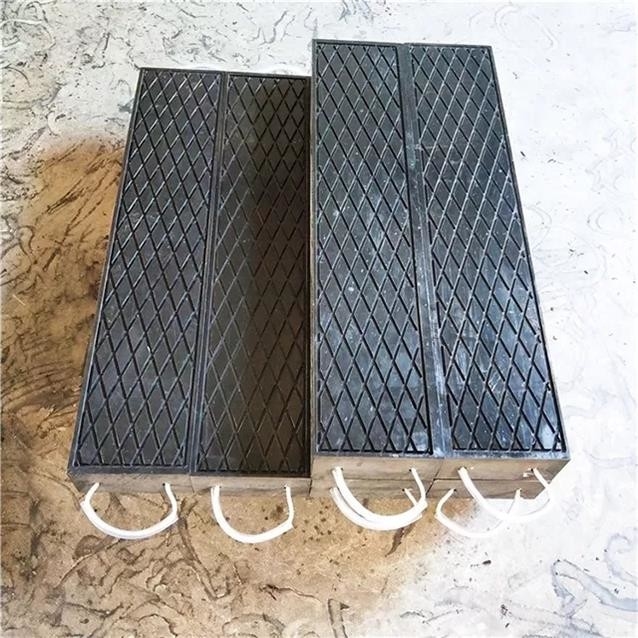
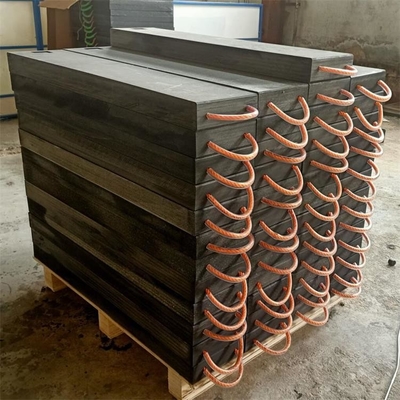
| Product Name: | HDPE Outrigger Pads Jack Plate Cribbing Block | Material: | PE Virgin 100% |
|---|---|---|---|
| Color: | Yellow,Black Or Customized | Size: | 600*150*150mm |
| Function: | Strong Pressure Bearing Capacit | Surface: | Anti-Slip, Smooth |
| Application: | Crane, Pump | ||
| Highlight: | PE Outrigger Cribbing Block,Strong Pressure HDPE Outrigger Pads,Jack Plate Cribbing Block |
||
Recorded specification
The item described on this page is the crib block sold as PE Outrigger Cribbing Block by Tangyin Taixing Engineering Plastics Co., Ltd. The block is a rectangular stackable section used under a crane outrigger, a jack plate or a pump stabiliser, and the values below are the recorded values for this listing rather than a family average.
| Manufacturer | Tangyin Taixing Engineering Plastics Co., Ltd. |
|---|---|
| Model Number | PE Outrigger Cribbing Block |
| Product name record | HDPE Outrigger Pads Jack Plate Cribbing Block |
| Material record | PE virgin 100 percent |
| Recorded size | 600 x 150 x 150 mm |
| Recorded thickness range | 5 mm to 200 mm |
| Recorded density | 0.94 to 0.98 g/cm3 |
| Water absorption | Less than 0.01 percent |
| Recorded molecular weight | 6,000,000 |
| Recorded bending strength | 30 MPa |
| Colour | Yellow, black, or customized |
| Surface record | Anti-slip and smooth |
| Recorded function | Strong pressure bearing capacity |
| Recorded application | Crane, pump |
| Certification | ISO9001 quality management system |
| Place of origin | China |
| Minimum order quantity | 100 pieces |
| Price basis | Negotiable |
| Payment terms | T/T, Western Union |
| Supply ability | 50000 pieces per month |
| Delivery time | 15-20 days after deposit received |
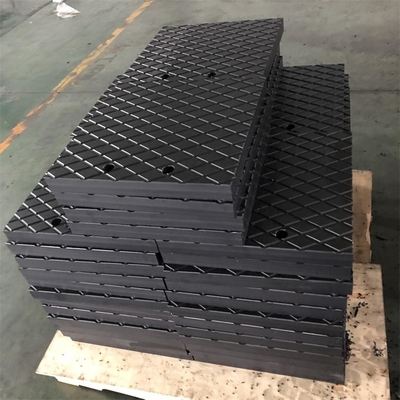
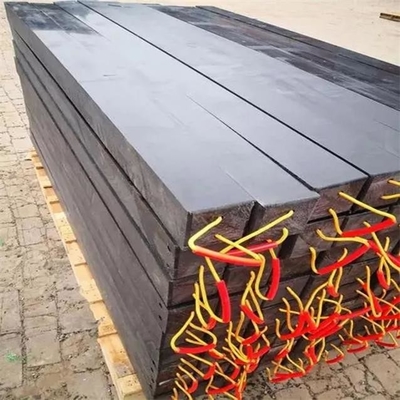
| Packaging | Wooden crate or pallet |
| Parameter | Standard configuration | Option or limit |
|---|---|---|
| Block section | 600 x 150 x 150 mm recorded for this listing | Other sections only against a confirmed drawing |
| Section range | The block sits inside the recorded 5 mm to 200 mm thickness range | Above 200 mm not recorded for this product |
| Face finish | Anti-slip face and smooth face, both recorded | Face allocation per block confirmed at order |
| Colour | Yellow or black | Customized colour quoted separately |
| Handling | Rope handles as described for the block | No other lifting point is recorded |
Resolution of three recorded conflicts: the original description refers to a recycled-plastic formula, while the attribute record states PE virgin 100 percent, and the attribute record governs for this listing; the description also quotes a 100 t feature and an 110,000 pound outrigger load limit, which are description-level figures and are not converted into a load rating here because the attribute record records the function only as strong pressure bearing capacity; and the 6,000,000 molecular weight figure is reproduced exactly as recorded without being reconciled against the HDPE designation.
Construction
The PE Outrigger Cribbing Block from Tangyin Taixing Engineering Plastics Co., Ltd. is a 600 x 150 x 150 mm solid polyethylene block used in stacks, not a single-layer mat. Its job is to build height in steps under an outrigger foot, so the construction question is not only how one block carries load but how a stack of blocks behaves at the interface between layers.
A block of this section presents a 600 x 150 mm bearing face at each end. When the outrigger foot lands on that face, the pressure is spread along the 600 mm length and then down through 150 mm of solid polyethylene to the layer below. Because the material is solid, the load path is continuous; there is no core to crush and no facing to peel. The recorded bending strength of 30 MPa describes how the material resists flexure, and the recorded density of 0.94 to 0.98 g/cm3 confirms a high-density polyethylene body rather than a low-density or foamed one.
The recorded 5 mm to 200 mm thickness range is the manufacturing envelope for this product line; the block itself is recorded at 150 mm, so an order that needs a different height should be quoted against a drawing rather than assumed from the range.
The interlocking design described for this block is what makes a stack safer than a pile of timber: the blocks register against each other, and the more load is applied the more firmly the set bears on itself. That is the mechanism the description calls tightening under load. It only works if the layers are aligned as intended, so a stack built with blocks turned across the grain of the layer below loses the register and behaves as a set of loose spacers.
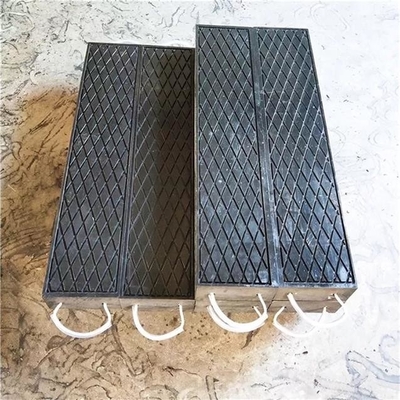
Two face conditions are recorded for this listing, anti-slip and smooth. On a stack, the anti-slip face belongs where two blocks meet or where the block meets a steel foot, because interface friction is what stops one layer sliding on the next. The smooth face is the one that presents a clean, easily cleaned surface and is the usual choice for the ground contact face on a finished floor.
Rope handles are described for this block so a crew can lift and position a layer by hand. The handle is a fitted element rather than a moulded recess, so it should be checked at each re-stack rather than assumed to be captive.
The recorded water absorption below 0.01 percent is what allows a stack to be left out in rain without gaining weight or losing stiffness. It also means the block does not swell in the joint, which is why a stack can be broken down and rebuilt on the next shift without the layers binding.
| Layer | Recorded element | Engineering role in the stack |
|---|---|---|
| Contact with foot | Anti-slip face, 600 x 150 mm bearing face | Grips the steel foot and spreads pressure along the block length |
| Block body | Solid PE virgin 100 percent, 150 mm section | Continuous load path with no core and no facing to delaminate |
| Layer interface | Interlocking register between blocks | Prevents one layer sliding or rotating on the next |
| Ground contact | Smooth face, water absorption below 0.01 percent | Clean release from the ground and no weight gain in rain |
| Handling | Rope handles | Manual placement of each layer without lifting gear |

Application boundaries and installation
The recorded application for the PE Outrigger Cribbing Block from Tangyin Taixing Engineering Plastics Co., Ltd. is crane and pump support. Those two cases share the same requirement: a foot applies a concentrated load, the ground is not level, and the crew needs to build height quickly and take it away again.
The block is the right element when the outrigger or jack foot has to be raised in defined steps, when the ground under the foot slopes, and when the set-up is temporary. It suits a boom truck, a digger derrick, an aerial device or a trailer-mounted pump standing on a prepared surface, and it suits stabilisation work where a load has to be shored in a controlled stack.
It is also the right element where a timber crib would fail through water: the recorded water absorption below 0.01 percent means the block does not take on water, does not rot, and does not splinter under the foot, which the description lists as the advantage over wood.
It does not replace a large-area outrigger pad on soft ground. A 600 x 150 mm bearing face concentrates pressure, so on wet clay or made ground the block will punch into the surface unless a wider pad sits beneath it. The description of this listing's family mentions a 600 x 600 x 40 mm base pad as a companion item, and that combination is the sensible one where bearing area matters; the pad is not the size recorded for this listing, so it should be ordered as a separate line.
It is not a levelling wedge and it is not a packing shim: the stack is built in whole layers, and a single block laid on edge or on a corner is outside the intended construction. It is also not a permanent foundation element, because the stack is designed to be dismantled.
Clear and roughly level the ground, then set the first layer with the largest face down and the blocks parallel to each other. Build upward with each layer turned at right angles to the layer below where the layout calls for it, so the interlock registers. Bring the stack to within a short distance of the foot and finish with the final layer in full contact, never with a gap at one end.
Check for edge distance: the foot should sit on the block with material under every part of the contact area, not overhanging the end. On a slope, the stack should be stepped rather than tilted, with each layer bearing fully on the one below. On release, take the stack down from the top and inspect each block for a crushed corner before it goes back into the crate.
Confirm the number of layers needed for the actual height, that every layer is in full contact, that the anti-slip face is at the interfaces, that the rope handles are intact, and that nothing loose sits between the layers. Confirm too that the ground under the bottom layer has not softened since the stack was built, which is the most common reason a stable-looking set-up moves.
Manufacturer and supply position
Tangyin Taixing Engineering Plastics Co., Ltd. is an engineering plastics manufacturer that combines production, sales, design and processing, with more than 20 years of experience, a plant area above 25,000 square meters and an annual output above 8,000 tons. The same business is also named on this site as Beijing Silk Road Enterprise Management Services Co., the export-management entity for the operation; the two names belong to one manufacturing and export organisation, not to two factories.
The block body is formed on the imported production line and the moulding press, which is where the 600 x 150 x 150 mm section and the face condition are set. Trimming, any section change and the fitting detail around the rope handles are completed on the CNC precise finishing machine, the carving machine and the CNC machining centres, with surface conditioning on the sander. Custom sections are handled through AutoCAD based design support before cutting.
In-house inspection uses the abrasion tester, the universal mechanical tester and the oxygen index tester in the company laboratory. For a crib block the universal mechanical tester is the instrument that speaks to the recorded 30 MPa bending strength, and the abrasion tester speaks to how the bearing faces hold up when a block is dragged across gravel.
The ISO9001 record on this site describes a quality management system covering the manufacture of polyethylene sheet and machined plastic products. It is a system certification, not a product-by-product approval, and it is not a material test report. No certificate number and no issuing body are recorded, and this page claims neither.
| Recorded term | Value | Consequence for a purchase plan |
|---|---|---|
| Minimum order quantity | 100 pieces | A piece count, so a 100 piece order can mix yellow and black or split sections only against a confirmed drawing |
| Supply ability | 50000 pieces per month | Large repeat orders fit normal scheduling; the delivery window, not capacity, sets the date |
| Delivery time | 15-20 days after deposit received | Book the crane or the job date from the deposit date, not from the enquiry date |
| Packaging | Wooden crate or pallet | Blocks arrive stacked; the crate is the re-usable store between jobs |
| Price basis | Negotiable | Quotation follows section, colour, face finish and quantity |
| Payment terms | T/T, Western Union | Both routes recorded; the deposit starts production |
Buyer FAQ
The 600 x 150 x 150 mm block of the PE Outrigger Cribbing Block takes the foot on a 600 x 150 mm face and carries it through 150 mm of solid polyethylene to the layer below. Tangyin Taixing Engineering Plastics Co., Ltd. moulds the block as a solid section, so the load path is continuous and there is no core that can collapse under a point load.
The recorded bending strength of 30 MPa describes the material's resistance to flexure, and the recorded density of 0.94 to 0.98 g/cm3 confirms a high-density body. Neither figure turns into a tonnage rating on its own: the working limit of the stack is set by the ground under the bottom layer and by how evenly the layers bear on each other.
A crib stack fails by one layer sliding or rotating off the next, not by the block itself breaking. The interlocking register described for the PE Outrigger Cribbing Block is what prevents that movement, and the description notes that the set bears tighter as load increases, which is the opposite of a loose pile of timber spacers.
Tangyin Taixing Engineering Plastics Co., Ltd. supplies the block at 600 x 150 x 150 mm, a section long enough to give a real register along the 600 mm edge. A crew that turns alternate layers across the register loses the benefit, so the laying pattern matters as much as the block.
Both face conditions are recorded for the PE Outrigger Cribbing Block, anti-slip and smooth, and the choice is made at order. Against a steel outrigger foot and between stacked layers, the anti-slip face is the one that develops friction at the interface, which is what keeps a layer from creeping when the foot takes load.
The smooth face is the one to put on the ground where the set-up has to be cleaned down and re-stacked, because mud releases from it. Tangyin Taixing Engineering Plastics Co., Ltd. therefore asks for the face allocation with the order rather than leaving it to the site, since the surface is set when the block is made.
The number of layers is a function of the height needed, not of a recorded maximum: the PE Outrigger Cribbing Block is recorded at a 150 mm section, so each layer adds that height and the total is set by how far the foot has to be raised. Tangyin Taixing Engineering Plastics Co., Ltd. records no stack height limit for this model, so height should be confirmed against the equipment manual for the machine being supported.
What the block does control is the quality of each interface. Every added layer adds one more face where sliding can occur, so a taller stack needs the anti-slip face at each interface and a full bearing contact at every layer rather than a stack built up with a gap at one corner.
The attribute record for the PE Outrigger Cribbing Block states PE virgin 100 percent, and that is the value this page follows. The original description of the same family refers to a recycled-plastic formula; where the two disagree, the attribute record governs, so a buyer ordering this listing should plan on virgin polyethylene.
Tangyin Taixing Engineering Plastics Co., Ltd. records water absorption below 0.01 percent, which is why a block can be used in rain, stacked wet and re-used without gaining weight or swelling at the interface. That is the property that makes the textile-style deterioration seen in timber cribbing irrelevant here.
The minimum order quantity recorded for the PE Outrigger Cribbing Block is 100 pieces. Because a set-up normally needs several blocks per foot, the minimum covers a small fleet rather than a single machine, and it is the natural size for a first order that mixes yellow and black for different roles in the stack.
Tangyin Taixing Engineering Plastics Co., Ltd. quotes negotiable pricing, so the section and face allocation inside that 100 pieces is what the quotation is built from. With supply ability at 50000 pieces per month, a follow-on order is not constrained by capacity.
The recorded packaging for the PE Outrigger Cribbing Block is a wooden crate or pallet, and that crate is also the practical store between jobs: blocks stack squarely, the crate keeps them off wet ground, and the rope handles can be checked as each block goes back in.
Tangyin Taixing Engineering Plastics Co., Ltd. records a delivery window of 15-20 days after deposit received, so a spare crate held on site is what covers the gap if a block is damaged mid-project. Because water absorption is below 0.01 percent, an outdoor store is not damaging in itself; what damages a block is a crushed corner from being dropped, so the crate should be lifted rather than tipped.
Yellow and black are the two recorded colours for the PE Outrigger Cribbing Block, with customized colour available on quotation. Yellow reads clearly against wet ground and against the underside of a machine, which is the reason it is the usual choice for blocks that are checked from a distance during a lift.
Tangyin Taixing Engineering Plastics Co., Ltd. sets the colour when the block is moulded, so the split between yellow and black is fixed at order and cannot be changed after delivery. A customized colour is a separate quotation item and should be agreed before the deposit, because the deposit starts the 15-20 day delivery window.
Receiving checklist
Contact Person: Mr. Sales
Tel: +86 152 1104 0646


 English