
|
Product Details:
|
| Item:: | UHMWPE Plastic Board Port Fender Marine Bumper Panel Facing Pads | Material: | 100% Virgin PE |
|---|---|---|---|
| Color:: | Natural White, Black, Yellow | Size:: | 1220mm*2440 Mm |
| Thickness:: | 5-200mm | Density:: | 0.94-0.98 G/cm3 |
| Processing Service:: | Cutting, Moulding | ||
| Highlight: | UHMWPE Marine Bumper Panel,UHMWPE Plastic Board Port Fender,UHMWPE marine bumpers for boats |
||
Listing record
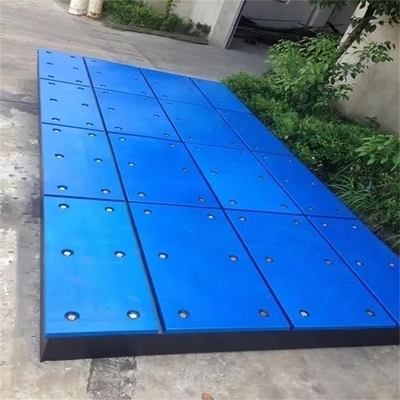
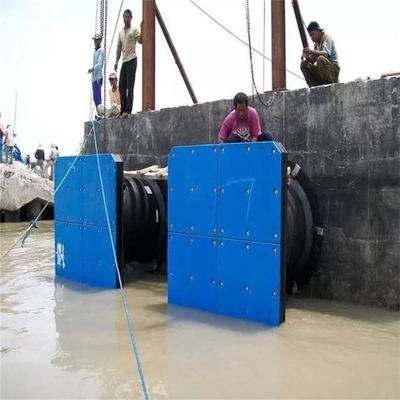
The part on this page is the UHMWPE Marine Bumper Panel produced by Tangyin Taixing Engineering Plastics Co., Ltd. as a facing pad for dock and quay fender systems. It is a polyethylene sheet cut to a panel size and used as the surface that a hull actually touches; the rubber arch fender behind it supplies the compliance, and the panel supplies the low-friction, non-marking wear face.
| Field | Recorded value for this listing |
|---|---|
| Model Number | UHMWPE Marine Bumper Panel |
| Item as recorded | UHMWPE plastic board port fender marine bumper panel facing pads |
| Material | 100% virgin PE, ultra-high molecular weight polyethylene |
| Size | 1220 x 2440 mm |
| Thickness | 5 mm-200 mm |
| Density | 0.94-0.98 g/cm3 |
| Colour | Natural white, black, yellow |
| Processing service | Cutting, moulding |
| Certification | ISO9001 quality management system covering the manufacture of polyethylene sheet and machined plastic products (system certification, not a product approval and not a material test report) |
| Place of origin | China |
| Minimum order quantity | 50 pieces |
| Price basis | Negotiable |
| Payment terms | T/T, Western Union |
| Supply ability | 50,000 pieces per month |
| Delivery time | 15-20 days after deposit received |
| Packaging | Wooden crate or pallet |
Two source problems were handled by following the record. The description opens with a paragraph describing single-piece rubber arch fenders, which is the body the pad is fitted to rather than the pad itself, so that paragraph was not used as a specification of this panel. The description also offers 5-10 days when goods are in stock, while the commercial attribute records 15-20 days after deposit; the attribute governs and no in-stock promise is made here.
These values come from the specification table in this listing's own description. They describe the material class and are the figures a quay designer can work with when comparing a polyethylene facing against a rubber or timber face; they are not a batch test report.
| Property | Published value | Meaning for a fender face |
|---|---|---|
| Density | 0.94-0.98 g/cm3 | Solid polyethylene, a band that sits below the density of water |
| Water absorption | <0.01% | No swelling or weight gain in permanent wet service |
| Impact strength | >=140 kJ/m2 | Energy the material absorbs before it fractures |
| Compressive strength | >=42 MPa | Resistance to being crushed between hull and fender body |
| Friction coefficient | 0.11-0.17 | Low sliding resistance against a hull or a rubber face |
The record spans 5 mm to 200 mm, which is the full sheet range of the factory rather than a single fender pad section. The two ends of that band behave as different products, and the order has to say which one is wanted.
| Thickness zone | Mechanical role | Typical position in a fender system |
|---|---|---|
| Thin end of the band | Wear and sliding face, little bending stiffness of its own | Facing screwed or bonded over an existing rubber or steel face |
| Middle of the band | Wear face plus its own stiffness, can span fixings | Replaceable panel on a quay wall or a floating pontoon |
| Thick end of the band | Load-bearing block in its own right | Stand-alone bumper where no rubber body is present |
Because density is recorded at 0.94-0.98 g/cm3, panel mass is a straightforward product of area, thickness and density, and it rises steeply across the band: a 1220 x 2440 mm panel at the thin end is a two-person lift, while the same panel at the thick end needs lifting equipment. No weighed figure is printed on this page, since the listing records no panel mass.
Construction
A marine fender face pad is a wear part that is meant to be replaced. The UHMWPE Marine Bumper Panel is a homogeneous polyethylene sheet with no facing layer and no backing, so the same material runs from the hull contact face through to the face that sits against the fender body. There is no interface to delaminate, which is the main structural argument for a solid polyethylene facing over a coated or laminated one.
The recorded friction coefficient of 0.11-0.17 is the number that governs how the pad behaves when a hull moves against it. A berthing ship moves vertically with the tide and longitudinally with mooring line tension, and every one of those movements is a sliding event at the pad face. A low-friction face converts that movement into sliding rather than into shear at the fixings, which is why the pad protects the fender body behind it and why the fixings survive a long campaign.
The same property works in the other direction. Because the face is slippery, a pad with an inadequate fixing can slide relative to its backing instead of gripping it; the countermeasure is a fixing pattern that clamps the pad rather than one that relies on friction. That pattern is a drawing item, not a catalogue item, as the next paragraph explains.
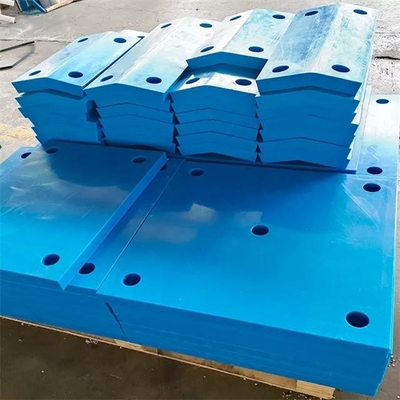
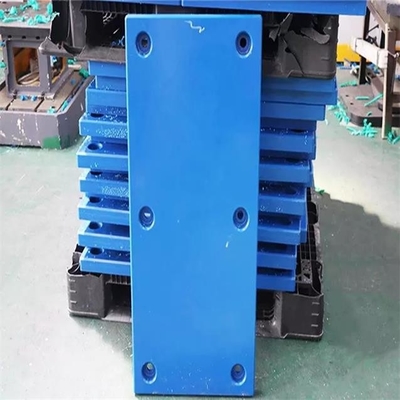
The processing services recorded for this listing are cutting and moulding only. No drilling, countersinking, chamfering or hole pattern appears in the record, and the standard size is a plain 1220 x 2440 mm sheet. A buyer who needs pre-drilled and countersunk holes for a bolted facing is therefore asking for a machined feature that this listing does not record, and it has to be specified on a drawing with hole diameter, pitch, edge distance and countersink angle.
An unfastened edge is the other detail worth deciding early. A square cut edge on a polyethylene panel is a snag point for a hull flare and for a mooring line, and a chamfer or radius at the exposed edges is a machining instruction rather than something that can be assumed from the sheet supply. Where the pad is clamped between a rubber fender and a steel backing strip, the edge condition matters less; where it is exposed on a quay wall, it matters a great deal.
Density is recorded at 0.94-0.98 g/cm3 and water absorption below 0.01%, so the panel does not take up water, does not gain weight in service and does not need a dry period between tides. The record also states that the material will not rot or crack when soaked for a long time, which is the property that separates it from the timber facing it usually replaces.
Three colours are recorded: natural white, black and yellow. Colour sits in the compound, so a scratch reveals the same colour rather than a substrate. Yellow reads against a dark fender body and against a wet hull, natural white shows contact marks and wear most clearly, and black hides both. No UV rating is recorded for this listing, so the page does not claim a weathering life for any colour.
Images are reproduced from the original description without change of address.

Limits and fixing
The recorded applications are harbour berths, chafing plates, floating wharves, sliding wall fenders, quay wall protection and pile protection. In every one of those positions the panel is the consumable surface: the structure or the rubber body behind it is designed to survive, and the pad is designed to be renewed.
The pad earns its place where a hull or a mooring line rubs, where a steel face would corrode, and where the surface behind must not be marked or abraded. The recorded low friction, low water absorption and resistance to rot make it a direct replacement for timber facing on a quay wall, and the recorded impact strength gives it the toughness to take repeated berthing contact without cracking through.
Because the panel is homogeneous, a worn face can be reversed in some installations, which doubles the service interval without changing the specification. That is a decision for the installer and depends on whether the fixing pattern is symmetric, but it is worth raising at the design stage rather than at the first replacement.
This panel is not a fender. It has no compliant body, no energy-absorbing geometry and no rated energy absorption, and nothing in the record gives it one. A berth that needs a defined energy absorption figure needs a fender unit behind the face pad; the pad only supplies the contact surface. Using a thick polyethylene block alone as a bumper is a design decision that needs its own engineering, not a substitution that follows from the thickness band.
Nor is the panel a structural member. It should not be used to bridge a gap between two fender units, to carry a mooring load, or to spread a load that the backing cannot take. And because no UV rating and no temperature range is recorded, a project in an extreme exposure class should ask for a written statement rather than extrapolate from the material name.
Fix the pad to a flat backing, because a polyethylene sheet will creep into a gap rather than bridge it, and an uneven backing shows through as a dished face within a season. Where the pad is bolted, use washers or a clamping strip wide enough to spread the bolt load, and keep the bolt holes clear of the panel edge by a margin that the drawing states rather than by eye. Where the pad is trapped behind a steel retaining strip, tighten progressively along the strip so the panel does not bow between bolts.
Leave the pad free to move. Polyethylene expands and contracts with temperature, and a panel fixed hard at every hole with no allowance will either bow or elongate its holes. Slotted or oversize holes at some positions, with the load taken at the clamped positions, is the usual way to accommodate that movement; no expansion figure is recorded for this listing, so the allowance is set on the drawing for the site's temperature range.
Handle panels flat. A 1220 x 2440 mm sheet lifted by two corners will bow and can take a permanent set, so use a spreader or a pallet and keep the panel supported along its length until it is against the backing. Cut edges should be de-burred before installation, and any cut made on site should be sealed from snagging by a light chamfer.
Manufacturer
Tangyin Taixing Engineering Plastics Co., Ltd. is the manufacturer recorded for the UHMWPE Marine Bumper Panel, and PE marine fender is named explicitly in the company's stated product range alongside UHMWPE board, outrigger pad, UHMWPE liner, plastic conveyor roller and HDPE sheet. The company states more than 20 years of engineering-plastics experience, a plant area above 25,000 square metres and annual output above 8,000 tons, and it combines production, sales, design and processing in one organisation. The same business is also recorded under the export-management name Beijing Silk Road Enterprise Management Services Co.; that is one manufacturing and export organisation carrying two recorded names.
The sheet itself comes from the recorded production line, and the company's stated standard sheet formats include 1250 x 3100 mm and 1220 x 2440 mm with thickness from 6 mm to 200 mm, which brackets the recorded 5-200 mm band of this listing. Cutting to the ordered panel size is one of the two processing services recorded here; moulding is the other, and it is the route for a curved or shaped facing rather than a flat panel.
The in-house laboratory records an abrasion tester, a universal mechanical tester and an oxygen index tester. Abrasion and compressive behaviour are the two properties a fender face is judged on, so the instruments map directly onto this product; the laboratory does not turn the published rows into a batch certificate, and no test report is recorded for this listing.
The recorded certification is ISO9001, a quality management system covering the manufacture of polyethylene sheet and machined plastic products. It is a system certification, not a product-by-product approval and not a material test report; no certificate number, issuing body or scope beyond that is recorded.
| Term | Recorded value | Consequence for a purchase plan |
|---|---|---|
| Minimum order | 50 pieces | Fifty pads suits one berth renewal plus spares, so a single fender line can be re-faced in one order |
| Supply ability | 50,000 pieces per month | Capacity supports a port-wide programme, so phasing is a logistics choice rather than a supply limit |
| Delivery | 15-20 days after deposit received | Plan the berth closure from the deposit date plus sea freight to the port |
| Packaging | Wooden crate or pallet | Large thin panels need full-face support in the crate or they bow in transit |
| Payment | T/T, Western Union | The deposit date starts the production window |
| Price | Negotiable | Thickness and panel size drive the price, so both must be stated before a quotation |
A 50-piece minimum is a realistic berth-renewal quantity and is the main commercial advantage of this listing for a port operator: one order can cover a full fender line with a spare set, without holding stock for years. Because the thickness band is so wide, the order should state a single thickness per line and keep the mix at panel size, not at section, so the crate can be stacked safely.
Questions
That band is the reason a hull slides along the UHMWPE Marine Bumper Panel instead of dragging on it. As a ship rises and falls with the tide, or moves fore and aft against its moorings, the contact point travels across the pad face; a low-friction face lets that travel happen as sliding, so the shear reaches the fixings only in proportion to that low resistance rather than in proportion to a gripping rubber or timber surface.
For Tangyin Taixing Engineering Plastics Co., Ltd. supply, the same property sets the fixing rule: because the face is slippery on both sides of the sheet, the pad has to be clamped rather than relied on to grip its backing. Specify clamping strips or washers sized for the bolt load, and treat the recorded 0.11-0.17 as a design input for the sliding interface rather than as a warranty of berthing performance.
The processing services recorded for the UHMWPE Marine Bumper Panel are cutting and moulding, and the recorded size is a plain 1220 x 2440 mm sheet. No drilling, countersinking or hole pattern is recorded, so a pad that arrives with holes in it has been made to a drawing, not to this catalogue entry, and the drawing has to be issued with the order.
When specifying holes through Tangyin Taixing Engineering Plastics Co., Ltd., state diameter, pitch, edge distance from the panel edge, and the countersink angle if the bolt head must finish flush with the sliding face. A bolt head standing proud of a fender face is a hull contact point that will mark paint, so flush finishing is usually part of the requirement even though it is not part of this listing's record.
The two ends of the recorded band are different parts in service. At the thin end the UHMWPE Marine Bumper Panel is a wear facing with almost no bending stiffness of its own and must sit on a flat, continuous backing; at the thick end it is a load-bearing block that can stand alone as a bumper where no rubber body exists.
Most quay renewals sit in the middle of the band, where the panel is thick enough to span its fixings and thin enough to be lifted and handled by a small site crew. Choose the thickness from the backing condition first, then from the wear allowance you want between replacements, and state the number to Tangyin Taixing Engineering Plastics Co., Ltd. as a single value rather than as a range.
The band sits below the density of water, and water absorption is recorded below 0.01%, so the UHMWPE Marine Bumper Panel does not take up water, does not gain weight between tides and does not need a drying period before refitting. That is the practical difference from the timber facing the panel usually replaces, which soaks, swells and rots.
For a fixed installation the density also fixes panel mass for a given size and thickness, which is why the same 1220 x 2440 mm sheet moves from a two-person lift at the thin end of the band to a machine lift at the thick end. Confirm the handling plan with Tangyin Taixing Engineering Plastics Co., Ltd. when ordering at the heavy end, because lifting points are not recorded for this listing.
The attribute record gives 1220 x 2440 mm as the size of the UHMWPE Marine Bumper Panel, and that is the configuration this page describes. The source description also lists 1200 x 4000 mm, 1250 x 3100 mm and 2200 x 1000 mm among sizes that can be supplied, but those are not in the record and must be quoted as separate sizes with their own price and lead time.
Custom sizes are stated as available, and cutting is a recorded service, so a berth with a non-standard fender spacing can be accommodated. Issue the panel dimensions from a site survey to Tangyin Taixing Engineering Plastics Co., Ltd. rather than scaling from a photograph, and confirm whether the requested size comes out of a standard sheet or needs a special run, since that decision changes both the price and the delivery date.
The recorded minimum is 50 pieces, counted per panel, which lines up with a fender line renewal plus a spare set. Because the same pad is used across many of the recorded applications, including chafing plates, floating wharves and pile protection, one 50-piece order can be split across several positions on the same berth rather than being consumed by one fender.
Supply ability is recorded at 50,000 pieces per month, so a 50-piece order is a very small slice of capacity and the delivery date is governed by the 15-20 day production window rather than by queue position. For a port-wide programme, place the order for the UHMWPE Marine Bumper Panel per berth with Tangyin Taixing Engineering Plastics Co., Ltd. so that each closure window is matched by its own delivery.
Natural white, black and yellow are the recorded colours of the UHMWPE Marine Bumper Panel, and the colour is in the compound rather than on the surface, so wear and scratching do not expose a different shade underneath. Yellow gives the strongest contrast against a wet hull and a dark rubber fender; natural white shows contact marks and abrasion most plainly, which some operators prefer because it makes inspection easy.
No UV rating, weathering life or colour-fastness value is recorded for this listing, so no guarantee of that kind is offered here even though the description describes the material as UV and ozone resistant. If a specification calls for a stated weathering performance, ask Tangyin Taixing Engineering Plastics Co., Ltd. for a written statement rather than treating the material name as the answer.
The commercial attribute records 15-20 days after deposit received, and that is the only figure used for planning here. The description mentions 5-10 days when goods are in stock, but stock is not a recorded condition of this listing and cannot be relied on for a berth closure date, so no in-stock promise is carried onto this page.
Build the programme for the UHMWPE Marine Bumper Panel from the deposit date with Tangyin Taixing Engineering Plastics Co., Ltd., add the recorded 15-20 day production window, then add sea freight and port handling to reach the quay. Where a closure window is fixed by tide or by a vessel call, order against that date rather than against the fastest number in the description.
Goods-in
Contact Person: Mr. Sales
Tel: +86 152 1104 0646


 English