
|
Product Details:
|
| Item: | Impact Resistance Seawater Boat UHMWPE Marine Fender Face Pad | Material: | 100% Virgin PE |
|---|---|---|---|
| Color: | Natural White, Black, Yellow | Shape: | Fender Pads |
| Size: | 500*500*10mm | Surface: | Smooth |
| Processing Service:: | Cutting, Moulding | ||
| Highlight: | Marine Fender Face Pad,Plastic boat fender pads,UHMWPE boat dock bumper pads |
||
Listing 37754083
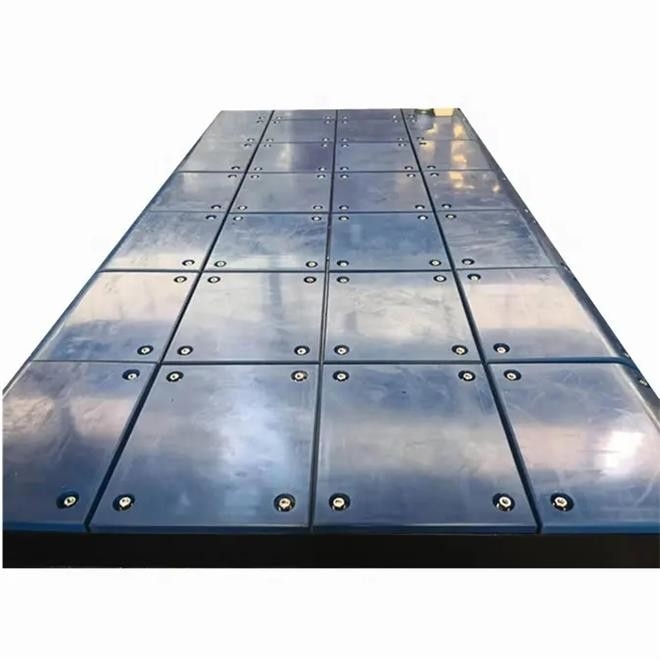
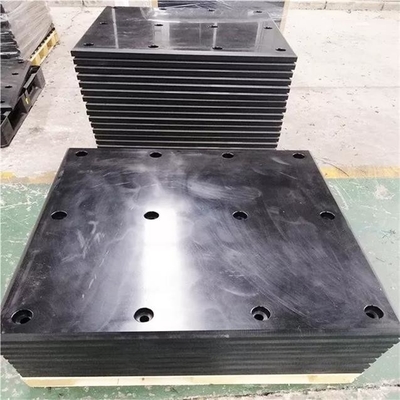
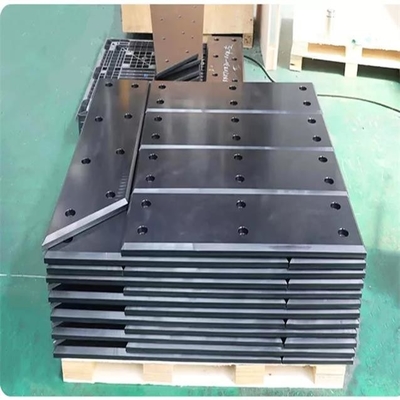
This listing is recorded as a marine fender face pad: a 500 x 500 x 10 mm polyethylene facing panel with a smooth surface, cut or moulded from 100 percent virgin PE and supplied in natural white, black or yellow. It is the sacrificial face that takes the hull contact while the rubber fender body behind it takes the compression. Its job is to slide, not to grip, and the 10 mm gauge is what defines how it is fixed and where it can be used.
| Attribute | Value recorded for this listing |
|---|---|
| Item | Impact resistance seawater boat UHMWPE marine fender face pad |
| Model Number | Marine Fender Face Pad |
| Material | 100% virgin PE (ultra-high molecular weight polyethylene) |
| Size | 500 x 500 x 10 mm |
| Shape | Fender pads |
| Surface | Smooth |
| Colour | Natural white, black, yellow |
| Processing Service | Cutting, moulding |
| Certification | ISO9001 quality management system |
| Place of Origin | China |
| Minimum Order Quantity | 50 pieces |
| Price | Negotiable |
| Payment Terms | T/T, Western Union |
| Supply Ability | 50000 pieces per month |
| Delivery Time | 15-20 days after deposit received |
| Packaging Details | Wooden crate or pallet |
| Parameter | Recorded position | Status |
|---|---|---|
| Panel footprint | 500 x 500 mm | Fixed by the record |
| Gauge | 10 mm | Fixed by the record |
| Face finish | Smooth | Fixed; the sliding face is the specified surface |
| Colour | Natural white, black, yellow | Chosen at order |
| Hole pattern | Not carried in the attribute record | Drawing item; confirmed before production |
| Edge detail | Not carried in the attribute record | Drawing item; confirmed before production |
| Other footprints or gauges | Not carried in the attribute record | Enquiry item against drawing |
Source-data note: the original description is a generic stock-sheet specification, listing four large sheet formats and a 5-200 mm thickness span together with density, water absorption, impact strength, compressive strength and friction coefficient values, none of which are carried in the attribute record for this listing, and its answer on lead time quotes 5-10 days for stock; the attribute record is authoritative, so this page is written for the recorded 500 x 500 x 10 mm smooth pad and uses the recorded 15-20 days after deposit as the delivery position.
A Marine Fender Face Pad is a flat plate bolted to the front of a rubber fender body. The rubber body does the energy absorption; the polymer face does the sliding and the wear. The pad is 10 mm thick and 500 x 500 mm square, which is thin enough to follow the fender face without a large bending load at the bolts and stiff enough to spread a hull contact over the rubber behind it rather than point-loading one bolt.
| Element | Recorded basis | Behaviour at the fender face |
|---|---|---|
| Face plate | 100% virgin PE, 10 mm, 500 x 500 mm | Sacrificial sliding surface; wears instead of the fender body and the hull paint |
| Surface | Smooth | Low resistance as a hull rolls and rises against the fender, so the pad slips rather than grabs |
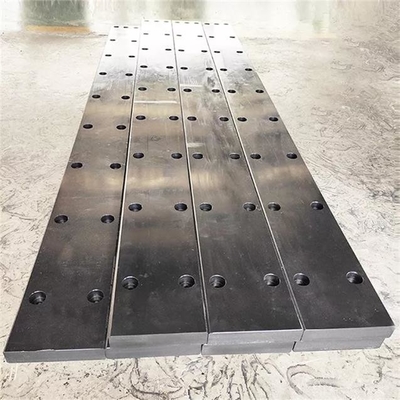
| Fastening zone | Hole pattern not recorded | Bolt positions are set by the fender body drawing, so the pad is drilled to match, not to a standard grid |
| Edge | Cut from the sheet | Square cut edge; a sharp corner at the top edge is the usual snag point for a rising hull |
| Colour | Natural white, black, yellow | Visual identification of the fender face and of wear on a dark rubber body |
A thin facing plate works by sliding, not by compressing. When a hull touches, the contact pressure is carried through the 10 mm section into the rubber behind it, and the rubber does the deflecting. The plate's contribution is a low-resistance face so that vertical hull movement does not drag the rubber and does not scrape the paint.
That means the fixings, not the plate, set the limit. A 10 mm plate held by bolts at a spacing wider than the plate can span will dish between the bolts and lift at the edge, and once an edge stands proud it catches the hull and peels. Bolt spacing and washer size are therefore the first things to agree on the drawing, before colour or gauge are discussed.
Because the panel is only 10 mm, any countersink eats most of the section at the hole. Where a flush face is required, the recess depth and the remaining material around the hole have to be reviewed, and a washer or a larger head is often the better answer than a deep countersink. No hole detail is recorded, so this is a drawing decision rather than a catalogue option.
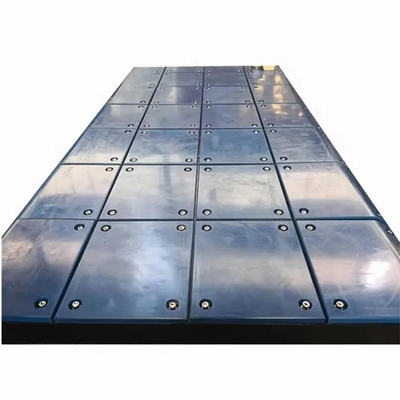
Where a fender face is wider than 500 mm, several pads are laid side by side. Keep the joints tight and on the same plane, because a hull sliding across an open joint catches the leading edge and lifts the downstream pad. Stagger the joints between rows so that no continuous line runs the full height of the fender, and keep fasteners out of the joint line itself.

Marine Fender Face Pad is recorded for seawater boat and dock contact duty. The description places the family on jetties and wharves for small craft, on tugs and workboats, on pontoons, on inland waterways and in general purpose fendering. The pad is a face, not a fender: it does not replace the rubber body and it is not designed to be the only energy-absorbing element between a hull and a wharf.
Work from the fender body drawing, not from the pad. Offer the pad up dry, mark the holes from the fender, and drill to suit the bolt with clearance for the plate to sit down flat. Take the burr off both faces of every hole; a burr under a washer holds the plate off the fender and puts the whole fixing into bending.
Fix from the centre outward so that the plate is not stretched between two already-tight bolts. Tighten to seat the plate against the fender face without dishing it, and check with a straight edge across the bolts afterwards. If the plate rocks on the fender, the fender face is not flat, and packing the whole face is better than over-tightening one bolt to pull a corner down.
Where bolts pass into a steel structure, isolate the fastener from the plate with a plastic or composite washer so that the two materials are not in direct contact, and use a washer under the head on the water side. Leave the pad free to expand at its edges rather than trapping it in a steel frame, since a restrained plate buckles between fixings as it warms.
Confirm the pad is 500 x 500 x 10 mm, that the face is smooth with no moulding ridge across the sliding area, that the colour matches the berth marking scheme, and that the drilled holes match the fender body. Check the top edge for a raised cut burr, because that is the edge a rising hull meets first.
Marine Fender Face Pad is manufactured by Tangyin Taixing Engineering Plastics Co., Ltd., an engineering plastics manufacturer combining production, sales, design and processing, with more than 20 years of experience, a plant area of more than 25,000 square meters and an annual output of more than 8,000 tons. PE marine fender is one of the product families the company states it makes, alongside UHMWPE board, synthetic ice rink, outrigger pad, UHMWPE liner, plastic conveyor roller, UHMWPE special-shaped parts, HDPE sheet, HDPE ground protection mat and dual colour HDPE sheet.
The process for this part is recorded as cutting and moulding. The sheet is consolidated on the imported production line or the moulding press, and the 500 x 500 mm outline is cut and finished on the CNC precise finishing machines, carving machine or sander. Hole drilling is drawing-driven, which is why the AutoCAD based design support matters: the fender body, not the pad, defines the pattern, and a pad drilled to the wrong pattern is scrap.
The company records an in-house laboratory with an abrasion tester, a universal mechanical tester and an oxygen index tester, which are the instruments relevant to a wear-facing polymer. The ISO9001 certification held by Tangyin Taixing Engineering Plastics Co., Ltd. is a quality management system covering the manufacture of polyethylene sheet and machined plastic products; it is a system certification, not a product approval and not a material test report, and no certificate number, issuing body, impact rating or friction figure is claimed on this page.
| Term | Recorded value | What it means for a berth project |
|---|---|---|
| Minimum order | 50 pieces | A small enough threshold to cover one fender line or several berths, so a single wharf repair can be ordered without a stock commitment |
| Supply ability | 50000 pieces per month | Ample monthly capacity for a phased fender replacement programme |
| Delivery | 15-20 days after deposit received | Counted from deposit, so a tidal or weather window has to be planned behind the full window |
| Packaging | Wooden crate or pallet | A stack of 10 mm plates needs a flat, rigid base, or the lower plates take a set and will not seat on the fender |
| Payment | T/T, Western Union | Both routes start the delivery clock at deposit |
| Price | Negotiable | Settled against quantity, colour and any drilling or edge work on the drawing |
The company profile page and the site footer also name Beijing Silk Road Enterprise Management Services Co. as an export-management entity operating the same engineering-plastics business. It is one manufacturing and export organisation under two recorded names, not a separate plant, so marine documents may carry either name while the pads are produced on the same line.
A 10 mm Marine Fender Face Pad from Tangyin Taixing Engineering Plastics Co., Ltd. has very little material to countersink into, so a deep recess at a bolt hole removes most of the section that holds the head. The practical answer is a washer under the head and a shallow or no countersink, keeping the plate flat against the fender body.
Bolt spacing also has to be tighter than on a thick pad. The 500 x 500 mm plate will dish between fixings if the spacing is too wide, and a dished plate lifts at the corner where the hull first touches. Agree the pattern on the fender drawing before the plates are drilled.
The surface is recorded as smooth, and for a Marine Fender Face Pad from Tangyin Taixing Engineering Plastics Co., Ltd. that is the functional face: a hull rolling and rising against a berth should slide on the pad rather than grip it. Grip would drag the rubber fender body and load the fixings in shear.
A smooth face is also easier to clean of marine growth and salt, and it shows wear as a polished area rather than hiding it in a texture. Protect it in transit and on site; a gouge across the sliding face becomes a point that catches the hull.
On Marine Fender Face Pad, the top edge is the first part a rising hull meets, so a raised cut burr or a proud edge there is a snag. Tangyin Taixing Engineering Plastics Co., Ltd. supplies the pad cut to a 500 x 500 mm outline, and the edge finish is a drawing item, so any chamfer or radius has to be specified rather than assumed.
On a multi-pad fender face, the joints between pads matter as much as the outer edge. Keep joints closed and flush, and stagger them between rows so no continuous line runs up the fender for a hull to catch.
Yes, and with a fixed 500 x 500 mm Marine Fender Face Pad panel that is the normal way to cover a large fender face. Tangyin Taixing Engineering Plastics Co., Ltd. supplies identical pads, so a face is built as a grid; the design work is in the joint layout and the bolt pattern rather than in the panel size.
Set the grid out from the centre of the fender so that any partial panel at the perimeter is symmetrical. Keep the fasteners away from the joint lines, and check the assembled face with a straight edge across several pads, because a single proud pad is enough to start a peel.
Natural white, black and yellow are all recorded for Marine Fender Face Pad. Tangyin Taixing Engineering Plastics Co., Ltd. supplies natural white where the pad should read as a clean polymer face, black where soiling and exhaust staining are expected, and yellow where the fender line should be obvious to a skipper at dusk.
Colour is an identification choice, not a strength grade; no property difference is claimed between the three. Because the colour is set when the sheet is made, it is fixed at order, and a change after the order is placed moves the delivery date.
The minimum for Marine Fender Face Pad is recorded as 50 pieces, which is low enough for a single wharf repair or a short fender line. Tangyin Taixing Engineering Plastics Co., Ltd. therefore lets an operator replace a worn face without buying a stock quantity, while still ordering enough to cover breakage during installation.
Because supply ability is recorded at 50000 pieces per month, a phased programme is easy to run: do the worst berth first, learn the bolt pattern and the handling routine, then order the next batch against the same drawing.
Marine Fender Face Pad from Tangyin Taixing Engineering Plastics Co., Ltd. is packed in a wooden crate or pallet, with delivery 15-20 days after deposit received. For a 10 mm plate, the risk in transport is bending and edge damage rather than weight, so the crate has to give a flat, rigid base; a sagging pallet leaves the lower pads with a permanent bow.
On site, store the pads flat and under cover, and never lean them against a wall in the sun. A 500 x 500 x 10 mm plate that has taken a set will not sit down on the fender, and forcing it with bolts puts the fixing into permanent bending.
Tangyin Taixing Engineering Plastics Co., Ltd. holds an ISO9001 quality management system covering the manufacture of polyethylene sheet and machined plastic products. For Marine Fender Face Pad that means the sheet production, cutting and drilling are managed under a documented system, which supports repeatability when a berth is re-fendered in phases.
It does not certify the pad against a berthing energy or a friction requirement. No certificate number, issuing body or test value is recorded, so a port authority that needs documented performance should request the specific test and agree the sample and acceptance figure before order.
Contact Person: Mr. Sales
Tel: +86 152 1104 0646


 English