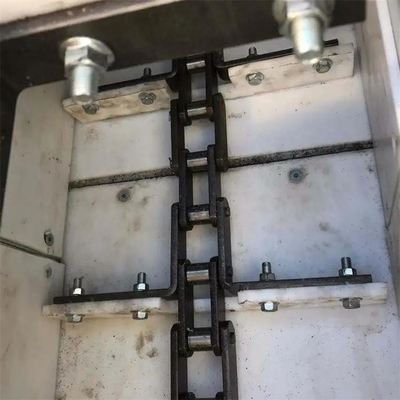

|
Product Details:
|
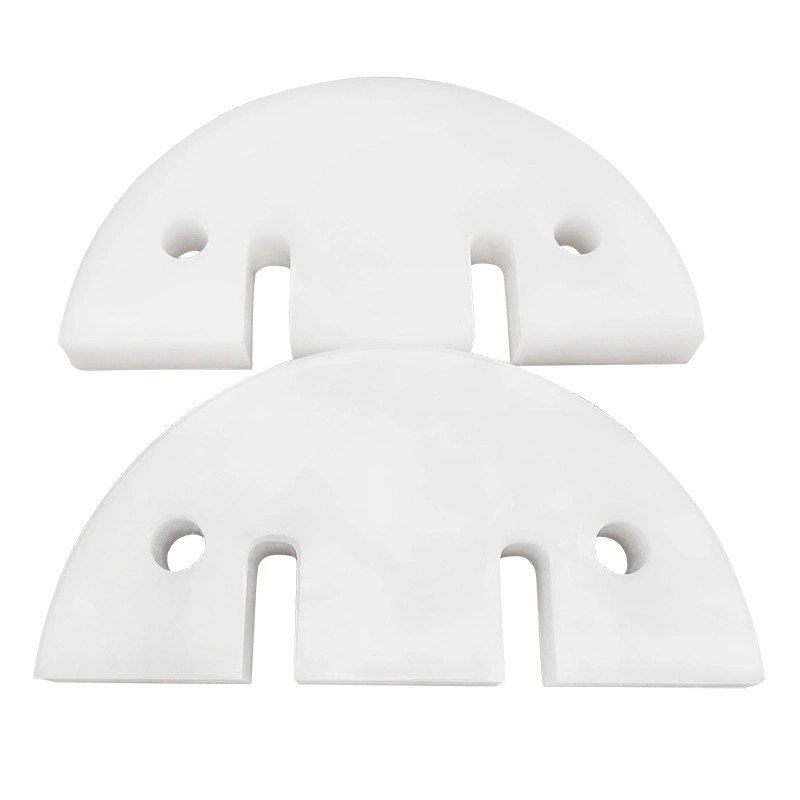
| Item:: | Wear-resisting UHMWPE Blade Drag Conveyor Chain Paddle | Material: | PE Virgin 100% |
|---|---|---|---|
| Color:: | White,Green,Blue Customized | Size: | Customized |
| Thickness:: | 6-200mm | Feature: | Wear Resistance |
| Application:: | Corrosion-resistant And Wear-resistant Mechanical Parts | ||
| Highlight: | UHMWPE Blade Drag Conveyor Chain Paddle,Conveyor Chain Paddle Blade Drag,UHMWPE Conveyor Paddle Blade Drag |
||
Listing record 37369154
This page covers one machined part: the wear-resisting drag conveyor chain paddle produced as model UHMWPE Blade Drag Conveyor Chain Paddle by Tangyin Taixing Engineering Plastics Co., Ltd. The record describes the part by function and material rather than by dimension, with the size entry held as customized and the thickness entry covering 6 mm to 200 mm, so the geometry of any specific paddle comes from the buyer's drawing and not from this page.
| Parameter | Recorded value |
|---|---|
| Item | Wear-resisting UHMWPE blade drag conveyor chain paddle |
| Model number | UHMWPE Blade Drag Conveyor Chain Paddle |
| Manufacturer | Tangyin Taixing Engineering Plastics Co., Ltd. |
| Material | PE virgin 100 percent |
| Colour | White, green, blue, customized |
| Size | Customized |
| Thickness | 6 mm to 200 mm |
| Feature | Wear resistance |
| Application | Corrosion-resistant and wear-resistant mechanical parts |
| Certification | ISO9001 quality management system |
| Place of origin | China |
| Minimum order quantity | 100 kilograms |
| Price basis | Negotiable |
| Payment terms | T/T, Western Union |
| Supply ability | 500000 kilograms per month |
| Delivery time | 15-20 days after deposit received |
| Packaging | Wooden crate or pallet |
The description supplied with this listing contains a material table. Its values are reproduced below because they accompany this product, but the attribute record does not restate them, so they are shown as description data and not as a test certificate. No standard is named against any row, because none is recorded.
| Property | Value in the source description |
|---|---|
| Impact strength | 140 kJ/m2 or above |
| Water absorption | Less than 0.01 percent |
| Compressive strength | 30 MPa or above |
| Ball indentation hardness | 20 N/mm2 or above |
| Abrasion loss | 3.8 x 10⁻⁴ g/cm2 |
| Heat distortion temperature | 85 deg C |
The source description is mislabelled in two places. Its heading names a polyethylene T-slot chain guide track rail, and the product-name row of its own specification table reads high density polyethylene plastic HDPE sheet, while its material row offers UHMWPE or HDPE. Neither label describes this listing, which is a machined drag conveyor paddle. The attribute record governs: the part on this page is a paddle in 100 percent virgin PE at 6 mm to 200 mm thickness, and the description table has been used only for the material values it carries, not for its product name or its mixed material row.
Because the size entry is recorded as customized, no dimension is quoted anywhere on this page. Where a number appears, it is either the recorded thickness range, the recorded commercial term, or a value from the material table identified as description data.
Construction
A drag conveyor paddle is a replaceable wear part with a mounting interface. It sweeps material along a trough, it is driven by a chain, and it is expected to lose material at its working edge over its life. The notes below follow the part from the drawing, through machining, to the point where it should be replaced.
The paddle is produced from the buyer's drawing, and three dimensions on that drawing decide everything downstream: the chain pitch and attachment centres, the sweep width relative to the trough, and the thickness at the working edge. Get the attachment centres wrong and the paddle will not sit square on the chain; get the sweep width wrong and the paddle either binds or leaves a ridge of material along the trough wall.
The recorded thickness range of 6 mm to 200 mm is the supply envelope, not a suggestion. A thin paddle suits a light duty run where the trough is short and the material is free-flowing, while a thick paddle suits a heavy run where the leading edge takes repeated contact with a packed burden. Because the size entry is recorded as customized, the outline is agreed per order and the thickness is the one variable the record lets a buyer reason about.
A polymer paddle is machined, not moulded, so the sequence is: cut the blank from plate, machine the outline, machine the mounting detail, then drill or slot the attachment points. The order matters. Cutting the outline first gives a datum edge for everything else, while drilling before the outline is machined leaves holes referenced to an edge that will be removed.
Two machining conditions have to be respected. The material has a low coefficient of friction and a high impact strength, which means it cuts cleanly but also means a blunt tool rubs rather than shears, and a rubbed edge goes white and can craze. And the material conducts heat poorly, so heat builds at the cut and stays there; a slow, sharp cut produces a better edge than a fast one on this material. The recorded processing route at the factory uses CNC machining centres and the CNC precise finishing machine for exactly this kind of part, with the sander available for edge preparation.
Every attachment point is a joint between a polymer part and a metal chain or bracket. A tight fit at that joint is a mistake, because the paddle has to be able to move slightly as it wears and as the chain articulates; a bolt that clamps the paddle rigidly will elongate the hole before the paddle is worn out. Clearance holes and slots are the correct detail, and the clearance should be enough to allow the paddle to seat against its mounting face without being pinched.
Where the paddle is bolted through a plate, use a washer or a spreader under the head. A polymer face under a bare bolt head creeps under sustained load, the bolt loses preload, and the paddle then works loose on the chain. The same reasoning applies to any slot: a slot that is too short becomes a tight hole as soon as the paddle moves.
Wear on a paddle is not uniform. It concentrates at the leading edge and along the bottom edge that runs closest to the trough floor, because that is where the sliding contact is. A paddle is designed with material to lose at those faces, and the replacement point is reached when the leading edge has worn back far enough that the paddle no longer sweeps cleanly, or when the attachment holes have elongated enough that the paddle no longer sits square.
The recorded abrasion loss figure from the source description, 3.8 x 10⁻⁴ g/cm2, describes the material's behaviour under the described test rather than the life of a specific paddle in a specific trough, and no service life is recorded for this listing. What the figure supports is a comparison between this material and an alternative, not a replacement interval. Replacement intervals have to come from the plant's own inspection record.
A drag conveyor usually carries several paddles on one chain, and they have to be interchangeable. That makes repeatability a construction requirement rather than a convenience: every paddle in a batch has to come off the same drawing revision, at the same thickness, with the same attachment centres. Where a plant replaces one paddle at a time, a batch that varies will show up as uneven chain loading long before any paddle is worn out.
Colour is a simple control on this. White, green, blue and custom colours are recorded, and a colour change between orders makes it obvious at a glance that a paddle on the chain came from a different batch.

Application
The recorded application is corrosion-resistant and wear-resistant mechanical parts, and the recorded part is a drag conveyor paddle. The boundaries below keep that description honest: a paddle is a wearing, replaceable element in a machine, and the machine around it sets limits the material cannot exceed.
It fits a drag or scraper conveyor handling a bulk solid where the trough is a straight run or a gentle curve and the paddle sweeps material without needing to crush it. It fits where the conveyed material is abrasive, where the trough is steel or stainless and where the plant wants the wearing element to be the cheap replaceable part rather than the trough floor.
It also fits where corrosion rules out a steel paddle. The recorded application names corrosion resistance alongside wear resistance, which is the combination that puts a polymer paddle ahead of a steel one in a wet or chemically active duty.
It does not fit a duty where the paddle has to break or crush material, because that is an impact and bending load that a polymer paddle of the recorded thickness range is not intended to carry. It does not fit a trough with a sharp step or a raised weld at the floor line, because the paddle will catch that step and the chain will take the shock.
It does not fit a temperature above what the material can hold; the source description records a heat distortion temperature of 85 deg C for the material, and that is a description value rather than a service limit for this listing, so a hot duty needs to be raised at enquiry rather than assumed. It also does not fit an application where the part must be certified to a standard, because the ISO9001 entry recorded here is a quality management system covering the manufacture of polyethylene sheet and machined plastic products, not a product approval.
Replace paddles as a matched set where the chain carries several, or at minimum in pairs opposite each other, so that chain loading stays even. Check the attachment bolts for preload after the first running period, because a polymer joint beds in and the bolt that was tight at assembly can be loose after a shift.
Set the running clearance before the chain is tensioned, not after. A paddle that is set too close to the trough floor will rub from the first revolution and wear at the bottom edge; one set too far leaves a layer of material that the next paddle then has to push. Confirm the paddle sits square to the chain by checking the gap at both ends of the sweep rather than at one.
Keep the removed paddle. A worn paddle is the best record of where the wear is concentrated on that machine, and it is the reference for the next order's wear allowance.
Compare the new paddle against the drawing revision and against the removed part. Check the attachment centres and the hole diameter against the chain, check the thickness at the leading edge, and check that the mounting face is flat enough to seat without a gap. Confirm the colour matches the batch the rest of the chain is running, so that a mixed batch is visible before it is installed.
Manufacturer
Tangyin Taixing Engineering Plastics Co., Ltd. produces this paddle within a range that includes UHMWPE board, synthetic ice rink, PE marine fender, outrigger pad, UHMWPE liner, plastic conveyor roller, UHMWPE special-shaped parts, HDPE sheet, HDPE ground protection mat and dual colour HDPE sheet. The company is an engineering plastics manufacturer combining production, sales, design and processing, with more than 20 years of experience, a plant area of over 25,000 square meters and an annual output of more than 8,000 tons. The export-management name recorded on this site, Beijing Silk Road Enterprise Management Services Co., belongs to the same manufacturing and export organisation.
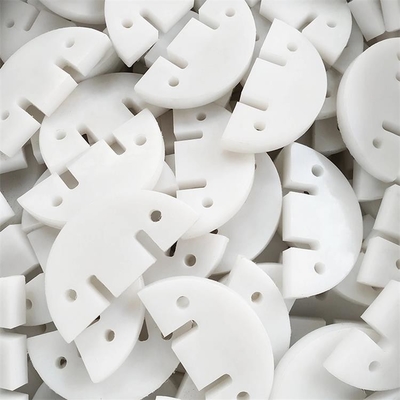
A paddle is a special-shaped part, and UHMWPE special-shaped parts are an explicit item on the recorded product range. That matters for a buyer because it means the part is not an adaptation of a stock sheet: the blank is cut from sheet on the imported production line and the moulding press machine, then machined to the drawing on the CNC precise finishing machine and the CNC machining centres, with the carving machine for profiled outlines and the sander for edge finishing.
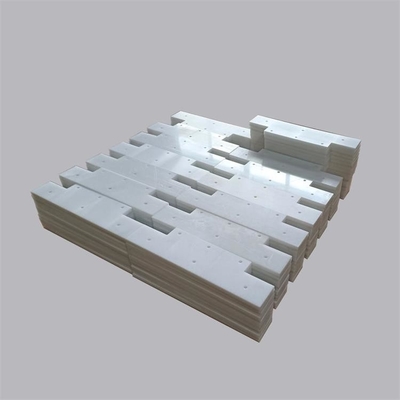
AutoCAD based design support is the step that makes a drawing-based order practical. A customer drawing can be reviewed against the recorded sheet formats - 1250 x 3100 mm, 1220 x 2440 mm and 2100 x 3100 mm, thickness from 6 mm to 200 mm, custom sizes accepted - before a blank is committed, which is how a paddle that will not nest inside an available plate is caught before production rather than after.
The in-house laboratory holds an abrasion tester, a universal mechanical tester and an oxygen index tester, and the recorded position on finished goods is that each production step and the finished product are inspected by the quality control department before shipping. For a wear part, the abrasion tester and the mechanical tester are the instruments that relate to the recorded feature, and they support batch comparison. They do not convert the material table in the description into a certified test report for this listing.
The ISO9001 entry recorded here is a quality management system covering the manufacture of polyethylene sheet and machined plastic products. It is a system certification, not a product-by-product approval of this paddle and not a material test report. No certificate number and no issuing body are recorded.
The minimum order is 100 kilograms. Because a paddle is a small machined part, that quantity usually means a batch of spares rather than a single replacement, which suits a plant that wants a set on the shelf. Supply ability is recorded at 500000 kilograms per month, delivery is 15-20 days after deposit received, payment is by T/T or Western Union, and price is negotiable against the drawing, thickness and colour.
Packaging is a wooden crate or pallet. For machined parts that matters at the machined faces and at the drilled holes: a paddle packed loose against another paddle will take knocks on the very edges that have to run true, so crating with separation is part of protecting the tolerance, not just the finish.
Buyer FAQ
Tangyin Taixing Engineering Plastics Co., Ltd. records the size entry for the UHMWPE Blade Drag Conveyor Chain Paddle as customized, so the drawing is the specification. The essential dimensions are the outline, the attachment centres and hole diameters for the chain, the sweep width against the trough, and the thickness at the working edge, which must fall inside the recorded 6 mm to 200 mm range. A drawing that gives only an outline leaves the machining of the mounting detail to assumption.
Send the drawing revision number with the enquiry. Because the UHMWPE Blade Drag Conveyor Chain Paddle is produced to a drawing, the revision is what the receiving inspection compares the part against, and a part made to an earlier revision is not a defective part - it is a part for a different machine.
A UHMWPE Blade Drag Conveyor Chain Paddle is a low-volume, drawing-specific part, and Tangyin Taixing Engineering Plastics Co., Ltd. machines it so that the outline, the attachment detail and the edge can be produced without a mould. The factory route for this part is a blank cut from sheet, machined on the CNC machining centres, finished on the CNC precise finishing machine and dressed on the sander where the edge needs it.
Machining also means a change in the drawing is a change in the program, not a change in tooling. For a plant that runs several conveyor widths, that is the difference between one part number and several, and it is why the recorded processing scope for this listing covers cutting and forming rather than a fixed moulded shape.
The attachment holes on the UHMWPE Blade Drag Conveyor Chain Paddle from Tangyin Taixing Engineering Plastics Co., Ltd. should be looser than a steel part would use. The paddle has to seat against its mounting face and then move slightly as it wears and as the chain articulates, so a clearance hole or a slot is the correct detail. A hole that grips the bolt transfers every chain impulse into the polymer around the hole, and that is where elongation starts.
Use a washer or a spreader under the head as well. A polymer face under a bare bolt head creeps under sustained load, and a UHMWPE Blade Drag Conveyor Chain Paddle that has lost its preload will work loose on the chain and then wear at the mounting face instead of at the working edge.
Two signals decide the question on a UHMWPE Blade Drag Conveyor Chain Paddle supplied by Tangyin Taixing Engineering Plastics Co., Ltd. The first is at the working edge: when the leading edge has worn back far enough that the paddle no longer sweeps the trough cleanly and material is left behind, the paddle has passed its useful thickness. The second is at the mounting: when the attachment holes have elongated enough that the paddle no longer sits square to the chain, the part is finished regardless of how much material remains.
The recorded abrasion loss of 3.8 x 10⁻⁴ g/cm2 in the source description is a material property, not a replacement interval, and no service life is recorded for this listing. Set the interval from the plant's own inspection of the UHMWPE Blade Drag Conveyor Chain Paddle on that machine, and keep the worn part as the reference for the next order.
It is the one dimensional variable the record fixes, so it is the number to state on the order. A paddle at the thin end of the range carries less wear allowance at the leading edge and deflects more under a packed burden; a paddle at the heavy end carries more material to lose and holds its shape along the sweep. Both are within the recorded range and both are legitimate for different duties.
Decide thickness from the duty, not from the previous part alone. If the previous UHMWPE Blade Drag Conveyor Chain Paddle from Tangyin Taixing Engineering Plastics Co., Ltd. wore through at the leading edge before the holes elongated, the machine is asking for more thickness at that face rather than for a different material.
The 100 kilogram minimum on the UHMWPE Blade Drag Conveyor Chain Paddle from Tangyin Taixing Engineering Plastics Co., Ltd. is a batch weight, so the number of paddles depends on the drawing and the thickness: a small paddle at the thin end of the record gives many parts per 100 kilograms, a large one at the heavy end gives few. In practice the minimum is reached by ordering the full set for one chain plus a spare set, which is the quantity most plants want on the shelf anyway.
Supply ability is recorded at 500000 kilograms per month, so the batch size does not strain capacity. Delivery of the UHMWPE Blade Drag Conveyor Chain Paddle is 15-20 days after deposit received, and because machining cannot start before the drawing is fixed, the drawing confirmation and the deposit should be released together.
Tangyin Taixing Engineering Plastics Co., Ltd. holds repeat orders of the UHMWPE Blade Drag Conveyor Chain Paddle interchangeable, provided the drawing revision and the colour are held. Every paddle on one chain has to be the same part, and a batch that varies in attachment centres will show up as uneven chain loading. State the revision number on the order and keep it with the machine file so the next order quotes the same revision.
Colour is a simple check on this: white, green, blue and custom colours are recorded for the UHMWPE Blade Drag Conveyor Chain Paddle, and a colour change between batches makes a mixed set visible on the chain before it causes a problem. Ask for the same colour on repeat orders unless the colour itself is being changed deliberately.
No. The ISO9001 entry that Tangyin Taixing Engineering Plastics Co., Ltd. records against the UHMWPE Blade Drag Conveyor Chain Paddle is a quality management system covering the manufacture of polyethylene sheet and machined plastic products. It is a system certification, not a product-by-product approval of this paddle and not a material test report, and no certificate number or issuing body is recorded for it.
The material values on this page come from the description table that arrived with the UHMWPE Blade Drag Conveyor Chain Paddle, and they are presented as description data. If a project needs a material test report for a specific batch, that is a separate request to be raised with the enquiry rather than something the system certificate supplies.
Receiving
Contact Person: Mr. Sales
Tel: +86 152 1104 0646


 English