
|
Product Details:
|
| Item: | Polymer Pipe Plastic HDPE Impact Conveyor Training Idler Rollers | Material: | Polyethylene |
|---|---|---|---|
| Color: | Blue,Black Or Customized | Size: | Dia: 76-194mm |
| Structure: | Ordinary Roller | Bearing Type: | Double Sealed Bearing |
| Process: | Mould Pressing | ||
| Highlight: | HDPE Impact Conveyor Training Idler Rollers,4 Inch Polymer Plastic Conveyor Rollers,HDPE Plastic Conveyor Rollers |
||
Listing 37704789
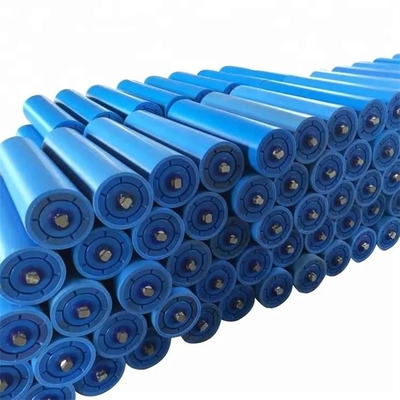
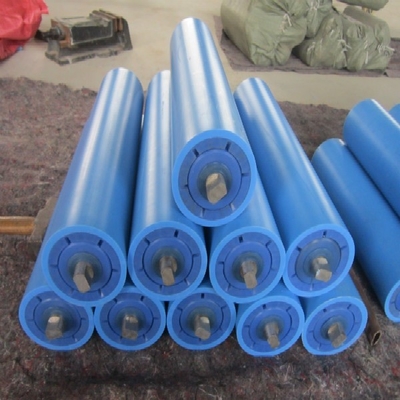
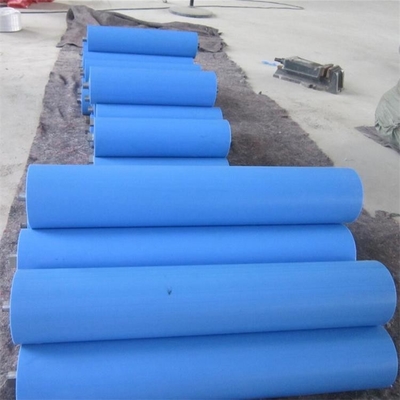
This listing is recorded as an HDPE impact conveyor training idler roller in the ordinary roller structure, moulded from polyethylene, with a double sealed bearing and an outside diameter anywhere in the 76-194 mm range. It is a polymer pipe roller: the shell is the wear part, the bearing is the rotating interface and the seal is what keeps the bearing alive in a dusty plant. Colour is blue, black or customized.
| Attribute | Value recorded for this listing |
|---|---|
| Item | Polymer pipe plastic HDPE impact conveyor training idler roller |
| Model Number | HDPE Impact Conveyor Training Idler Rollers |
| Material | Polyethylene |
| Size | Diameter 76-194 mm |
| Structure | Ordinary roller |
| Bearing Type | Double sealed bearing |
| Process | Mould pressing |
| Colour | Blue, black or customized |
| Certification | ISO9001 quality management system |
| Place of Origin | China |
| Minimum Order Quantity | 500 pieces |
| Price | Negotiable |
| Payment Terms | T/T, Western Union |
| Supply Ability | 500000 pieces per month |
| Delivery Time | 15-20 days after deposit received |
| Packaging Details | Wooden crate or pallet |
| Parameter | Recorded position | Ordering status |
|---|---|---|
| Outside diameter | 76-194 mm band | Any diameter inside the band is a recorded option |
| Shell material | Polyethylene, mould pressed | Fixed by the record |
| Bearing | Double sealed | Fixed by the record; seal is the specified feature |
| Structure | Ordinary roller | Fixed; not a spiral, disc-return or impact-cradle assembly |
| Face length | Not carried in the attribute record | Drawing item, confirmed before production |
| Shaft end detail | Not carried in the attribute record | Drawing item, confirmed before production |
| Colour | Blue, black, customized | Chosen at order |
Source-data note: the original description tabulates outside diameters only from 76 to 159 mm and prints bearing designations, a custom length range and a spindle head list, while its body text quotes wear and impact multipliers and a minus-196 low temperature. The attribute record is authoritative: it states a 76-194 mm diameter band and a double sealed bearing, so this page uses that band and does not repeat the multipliers, the temperature figure, the bearing designations or the length range.
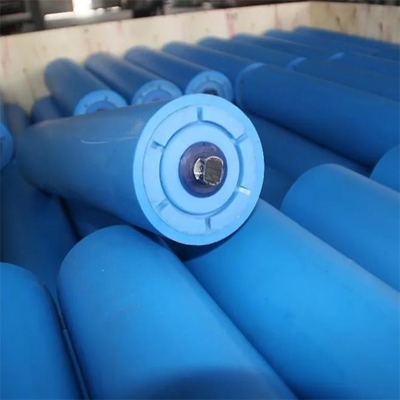
An HDPE Impact Conveyor Training Idler Rollers unit is built outward from the shaft. The shaft passes through a double sealed bearing at each end, the bearing sits in the moulded polyethylene shell, and the shell carries the belt. Because the process is recorded as mould pressing, the shell wall and the bearing seat are formed as one polymer body rather than as a steel tube with a pressed-in end cap, which removes the corrosion path that normally ends a steel idler in a wet plant.
| Element | Recorded basis | Function and inspection point |
|---|---|---|
| Shell | Polyethylene, mould pressed, diameter 76-194 mm | Belt contact face; wall must be uniform round the circumference or the roller will run out |
| Bearing | Double sealed bearing | Two sealing stages keep dust and wash water out of the rolling elements |
| Bearing seat | Formed in the moulded shell | Seat concentricity sets runout; a seat moulded off centre makes the whole roller thump |
| Structure | Ordinary roller | Straight carrying or return roller, mounted in a standard frame |
| Diameter band | 76-194 mm | Small diameters suit tight return runs, large diameters give a bigger belt contact arc and slower rotation |
| Colour | Blue, black, customized | Blue reads as a polymer idler on a steel frame; black is the neutral plant colour |
The record gives a range from 76 to 194 mm rather than a single diameter, which is how a roller range is actually sold: the same construction is moulded at several shell sizes so a plant can match belt width, belt speed and frame height. A larger shell turns more slowly for the same belt speed, which reduces the revolutions the bearing and seal have to survive; a smaller shell fits where frame space is tight and the belt only needs support.
Changing diameter changes the roller mass and therefore the inertia the belt has to start. It also changes the contact arc under the belt, so a replacement roller should match the diameter of the one it replaces rather than sit anywhere inside the band. The band is a manufacturing capability, not a licence to mix diameters on one conveyor.
The double sealed bearing is the defining feature of this model. In a plant with dust, grit or wash-down, the bearing fails first, and it fails because contamination reaches the rolling elements. Two seals in series give two barriers, and the second barrier only works if the first is intact, so the seal lip is the part to look at on receipt and again at every belt shutdown.
The polyethylene shell is the running face. It is a polymer pipe, so it does not corrode and does not build a rust scale that would score the belt; the description states that a failed polymer roller does not present the sharp rotating edge that a failed steel roller does, and that statement is repeated here as a description-stated behaviour rather than as a measured result.

HDPE Impact Conveyor Training Idler Rollers are recorded as ordinary rollers for belt conveyors. The description places the duty in dusty, corrosive and wash-down plants such as mining, power, steel, stone, cement, coking, coal washing, salt, alkali, fertiliser and dock installations. The double sealed bearing is what makes that duty credible; the polyethylene shell is what keeps the roller alive when the atmosphere is wet.
Isolate the belt and lock out before touching a roller. Support the belt, release the frame, and lift the roller out by the shaft ends rather than by the shell; a moulded polymer shell is strong in service but a sling around the middle of a long roller puts a bending load where the design does not expect it.
Check the frame slots before fitting the replacement. A worn or ovalised slot lets the shaft sit low, which tilts the roller and trains the belt to one side; the roller will then be blamed for a tracking fault it did not cause. Seat the shaft fully, confirm the roller turns freely by hand, and check that the seal is not pinched between the bearing housing and the frame.
Set roller spacing to suit the belt and the load, not to the number of spare rollers available. Too wide a spacing lets the belt sag between rollers and increases the load on each one; too narrow a spacing adds rotating mass and drag. After the belt is re-tensioned, run it empty and listen: a thump at a regular interval is a runout or a flat spot, and a squeal is a seal or bearing seating fault.
Confirm the shell diameter is inside the recorded 76-194 mm band and matches the position it will fill, confirm the bearing is the double sealed type recorded, confirm the colour matches the plant code, and turn every roller by hand to feel for a rough bearing or a seal that drags. A roller that is stiff on the bench will run hot on the line.
HDPE Impact Conveyor Training Idler Rollers are produced by Tangyin Taixing Engineering Plastics Co., Ltd., an engineering plastics manufacturer combining production, sales, design and processing. The company records more than 20 years of experience, a plant area of more than 25,000 square meters and an annual output of more than 8,000 tons, and plastic conveyor roller is one of the product families it states it manufactures, alongside UHMWPE board, synthetic ice rink, PE marine fender, outrigger pad, UHMWPE liner, UHMWPE special-shaped parts, HDPE sheet, HDPE ground protection mat and dual colour HDPE sheet.
For this part the recorded process is mould pressing, which is done on the moulding press machine in the company equipment list. The shell is formed, the bearing seat is produced to hold the double sealed bearing, and the finished roller is checked for round and for free rotation. CNC precise finishing machines, a carving machine, a sander machine, CNC machining centres and AutoCAD based design support matter when a plant wants a non-standard face length or a particular shaft end, because those features are drawing-driven rather than catalogue-driven.
The in-house laboratory recorded by the company holds an abrasion tester, a universal mechanical tester and an oxygen index tester, which are used to check the polyethylene batch behind the shell. The ISO9001 certification of Tangyin Taixing Engineering Plastics Co., Ltd. is a quality management system covering the manufacture of polyethylene sheet and machined plastic products. It is a system certification, not a product approval, and it is not a material test report; no certificate number, issuing body, bearing brand approval or test result is claimed on this page.
| Term | Recorded value | Purchasing consequence |
|---|---|---|
| Minimum order | 500 pieces | A line-changeover quantity: one conveyor replacement campaign or a plant spare-stock build, not a single-roller repair |
| Supply ability | 500000 pieces per month | Monthly capacity is far above a single line's requirement, so a rolling spare-stock programme is realistic |
| Delivery | 15-20 days after deposit received | Shutdown dates must be set back from the deposit by the full window plus freight |
| Packaging | Wooden crate or pallet | Rollers are round and will roll against each other in a loose carton; a rigid crate with separation protects the seals |
| Payment | T/T, Western Union | Either route starts the delivery clock at deposit |
| Price | Negotiable | Settled against diameter, face length, shaft end and quantity |
The company profile and the site footer also name Beijing Silk Road Enterprise Management Services Co. as an export-management entity operating the same engineering-plastics business. It is one manufacturing and export organisation under two recorded names, not a second factory, so documents may carry either name while the rollers are made in the same plant.
The 76-194 mm band on HDPE Impact Conveyor Training Idler Rollers supplied by Tangyin Taixing Engineering Plastics Co., Ltd. is a manufacturing range, not a free choice on one conveyor. Match the diameter to the roller position being replaced, because diameter sets the belt contact arc and the frame height; a mixed set on one line will run at different surface speeds.
Where a new line is being built, the diameter follows the belt width and the frame design. A larger shell turns more slowly at the same belt speed, which is easier on the bearing and seal; a smaller shell fits a tight return run. State the diameter on the order, as the band alone does not fix it.
The record specifies a double sealed bearing for this model, which means two sealing stages between the plant atmosphere and the rolling elements. On HDPE Impact Conveyor Training Idler Rollers from Tangyin Taixing Engineering Plastics Co., Ltd., that arrangement is aimed at the two killers of a conveyor bearing: fine dust drawn in as the roller cools, and wash water pushed in during cleaning.
Seals only work while both lips are intact, so the seal is a receiving inspection point, not a fit-and-forget item. Check for a lip folded over during assembly and for grit trapped between the seals, and replace rather than re-grease a roller that feels rough.
Process is recorded as mould pressing, so the polyethylene shell and the bearing seat are formed as one body. On HDPE Impact Conveyor Training Idler Rollers from Tangyin Taixing Engineering Plastics Co., Ltd. this avoids the separate end cap and its fixing, which is where a steel roller usually begins to corrode and where a pressed cap can work loose.
The mould also sets concentricity between the outside diameter and the bearing seat. That relationship is what keeps runout low, so the mould condition and the seat finish are the two things a buyer should ask about when a roller thumps. No runout figure is recorded, so the check is a hand turn and a dial check on sample rollers.
Spacing follows the belt and the load, not the roller diameter alone. HDPE Impact Conveyor Training Idler Rollers from Tangyin Taixing Engineering Plastics Co., Ltd. are ordinary rollers, so they support the belt between frames; set them too far apart and the belt sags, which loads each roller unevenly and trains the belt badly.
The record carries no load rating, so spacing has to be checked against the conveyor design rather than taken from a table on this page. A practical sequence is to keep the existing spacing on a like-for-like replacement, then review it only if belt sag or roller temperature shows the line is working the rollers harder than before.
Colour is recorded as blue, black or customized, so Tangyin Taixing Engineering Plastics Co., Ltd. can match a plant colour code as well as the two standard colours. On HDPE Impact Conveyor Training Idler Rollers the colour is an identification feature for maintenance crews, and no performance difference is claimed between the options.
Blue is a useful visual marker for a polymer roller against a steel frame, which helps an inspector spot a swapped or missing roller quickly. Colour is set when the shell is moulded, so it is fixed at order and a late change moves the delivery date.
The minimum is recorded as 500 pieces. Tangyin Taixing Engineering Plastics Co., Ltd. therefore sells HDPE Impact Conveyor Training Idler Rollers in a quantity that matches a full line replacement or a plant spare-stock build, not a single-roller repair.
That suits a planned shutdown: count the rollers on the conveyor, add a working percentage as spares, and place the batch ahead of the shutdown. Because supply ability is recorded at 500000 pieces per month, a repeat batch can follow the same schedule once the diameter and face length are fixed.
For HDPE Impact Conveyor Training Idler Rollers, packaging is recorded as a wooden crate or pallet, with delivery 15-20 days after deposit received. Tangyin Taixing Engineering Plastics Co., Ltd. packs a round product that will roll in transit, so the crate has to hold the rollers apart and protect the seal ends; a crate that has shifted in transit is the first thing to look at.
On arrival, open the crate from the top, take the rollers out by the shaft, and turn each one by hand. Look for a crushed shell end, a seal pushed out of its seat and any roller that does not spin freely; those three faults account for most of the failures that appear in the first weeks on a line.
Tangyin Taixing Engineering Plastics Co., Ltd. holds an ISO9001 quality management system covering the manufacture of polyethylene sheet and machined plastic products. For HDPE Impact Conveyor Training Idler Rollers that means the moulding, bearing fitting and finishing steps are controlled under a documented system, which supports repeatability between batches.
It is not a product certificate and not a bearing approval. No certificate number, issuing body, bearing designation approval or load rating is recorded, so a plant that needs a documented capacity or a named bearing brand should raise it as a separate request and agree the acceptance criteria in writing before the order is placed.
Contact Person: Mr. Sales
Tel: +86 152 1104 0646


 English